Faisalabad | Business Hub of Pakistan | Best Time to Visit 2026
Faisalabad is a famous city known as the Manchester of Pakistan because it has many Textile mills. The old name of Faisalabad is Lyallpur. With time, many industrial units have assembled here, which helps to promote Pakistan’s development. The city presents many historical incidents of its development.
Faisalabad is the third biggest city in Pakistan after Karachi and Lahore. This city is famous due to its vast fertile cultivation, industrial zones, and many better opportunities for the educational system. In this blog, we try our best to explore the best ways to describe the beauty of Faisalabad City so that everyone who reads this blog can easily recognize Faisalabad.
When we started to research Faisalabad, we were wonderstruck to realize that it is such a remarkable city and has the magic to attract tourists. In this blog, you first get awareness about the history of Faisalabad. The geographic site of the city is healthy and good. The people enjoy the taste of foods, industrial areas that provide the best opportunities for rozgaar, and an advanced educational system in the city.
Table of Contents
1- History
2- Sectionalization
3- Geographic’s
4- Art Council Faisalabad City
5- Festivals Held In Faisalabad City
6- Culture
7- Famous Food Point
8- Top 8 Restaurants in Faisalabad
9- Literacy Rate in Faisalabad City
10- The Population of Faisalabad City
11- Industrial Zone
12- Clock Tower
13- Education In Faisalabad City
14- Administration
15- Union Councils in Faisalabad
16- Faisalabad Development Authority
17- Major wings
18- Law Enforcement Institution
19- Healthcare Centers
20- Media in Faisalabad
21- Tourist Attraction Places
22- Top 5 Places for Children to Visit
23- Stadium
24- Public Libraries
25- Lyallpur Museum
26- Transport
27- FESCO
28- Conclusion
1- History:
Sandal bar Jungle:
About 130 years ago, an immense and thick jungle was established there, known as the Sandal Bar. It was a haven for robbers and freedom fighters. In the local language, “bar” means a natural jungle where no place exists for cultivation and human colonization. This jungle was spread over 60 km from East to West and 130 km long from North to South. Dulla Bhatti, the legendary hero of Punjab, was named after his grandfather, Sandal, and after this, the jungle became famous as Sandal Bar in his honor. During this time, Jaranwala, Jhang, Tandlianwala, Pir Mahal, and Pindi Bhattian are a part of the Sandal Bar jungle.
Early Colonial Settlement:
The Punjab region was known as the Province of Punjab at the end of the Second Angelo – Sikh war, organized in 1849. In 1858, the British Government possessed that fertile land. The British Government built a market in the Sandal Bar Area, so the rebels left this area permanently. This area is productive due to the abundance of water. The British persuaded their managers to rehabilitate the Sandal Bar area with a well-planned irrigation scheme. The water infrastructure is better, so the land of West Punjab doesn’t become barren.
The merchant also used this road to travel to Lahore. In 1880, the design of Faisalabad was prompted by Captain Popham Young, which presents a Clock Tower (Ghanta Ghar), recognizing eight different bazaar designs resembling the Union Flag. They constructed a new and beautiful city. In 1882, the (Sandal Bar) sector was known as Lyallpur, in the name of Sir Charles James Lyall, because during the construction of the Colonies, they showed enthusiastic support for the establishment of the Colonies project. In Sanskrit, “pur” is known as a city.
2- Sectionalization:
When the British lived there, they performed many development projects to enhance the beauty of this metropolis. Before the independence of Hindustan, Muslims, Hindus, and Sikhs cohabited. But they couldn’t live together because they had separate religious beliefs and encountered many wars and conflicts. After many struggles, when the Partition of the Subcontinent was held, the region of the Muslim Majority was named Pakistan, and the area of the Hindu majority was called India.
The Province of Punjab was partitioned into two functions, a specified Western region titled Pakistan and the Eastern portion named Hindustan- Partition of the Subcontinent. The Muslim majority migrated to Pakistan, and Hindus migrated to India. As a result of migration, the nation lost virtually one million people.
The name ‘Lyallpur’ was changed to Faisalabad:
Saudi King Shah Faisal had shown enthusiastic investment in the development of Lyallpur City. In 1977, Lyallpur City transformed into Faisalabad in the name of the late King Shah Faisal, and in 1985, Faisalabad City was upgraded as a division with the Districts of Toba Tek Singh and Jhang.
3- Geographic:
From a geographical point of view, this area is suitable for the rehabilitation of any market, education, industries, agriculture, and housing society for people. The fertile land, environment, and culture are the best geographic point of view.
The climate of Faisalabad City over the Year:
Being a plain area, it has to face rainfall with thunder and heavy storms, and rain destroys Faisalabad’s crops and their fertility. June is the hottest month during the summer season in Faisalabad city. The annual average temperature record is 26.2°C. In Faisalabad city, the maximum temperature in June reached 41°C (105 °F). Dust and Heavy storm faces in the summer season.
The Monsoon season has to start in Faisalabad city on 15 July and take over on 15 September. Almost the highest rainfall occurred in July. According to an estimate, total precipitation occurred in July of about 145mm (5.7 in), and approximately annual rain occurred in Faisalabad city, about 615 mm.
If we research the history pages on 9 June 1947, the highest temperature of Faisalabad City was recorded at 48 °C (118.4°F), and the same temperature was memorable on 26 May 2010. The climate of Faisalabad city is semi-humid. The annual rain that occurred in the city averaged 101mm. The summer season runs from April to October, and the winter season begins in November and ends in March. In the summer, the highest temperature recorded in June is 45.5 °C, and the lowest temperature reaches 26.9 °C.
The highest temperature recorded in the winter was 19.4 °C, and the lowest temperature reached 4.1 °C. January is the coldest foggy month of the year. Its temperature in the daytime is to record a maximum of 20.7°C (69.26 °F) and a minimum of 6.2 °C (43.16 °F). The rain record for that month was about 20mm (0.8 Inches). Some months have good rain,s while some months pass without rain.
Faisalabad City Location:
Faisalabad is famous as the third-largest city in Pakistan due to its population and industrial units spread over immense plots. The Faisalabad Urban Center is bound to District Chiniot and Hafizabad on the northern side, and Eastward, it is placed to Nankana Sahib. Okara City is southeastward, Sahiwal and Toba Tek Singh City are positioned in the south, and the west is bound for Jhang City.
Faisalabad Land Surface:
The land of Faisalabad city is very fertile and lies between the Rachna Doab Upper lands. This area is fertile due to the sufficiency of water. The cultivation surface area in Faisalabad is around 316,815. The major cultivated crops include sugarcane, maize, wheat, masoor, mash, jawar, vegetables, fruits, etc.
Faisalabad contributes 10% of its GDP (Gross Development of Pakistan) to Punjab’s revenue, while its nominal GDP is $20.5 million. In 2021, the GDP (Gross Domestic Product) of Faisalabad City approached $ 92 billion. Faisalabad City is located at an elevation of 600 feet overland. These plains generally consist of flooded rivers.
4- Art Council Faisalabad City:
Faisalabad City is renowned for detectable development operations attributable to different historical incidents. Faisalabad is the third biggest city in population in the Province of Punjab, after Lahore, which is the second largest. In ancient times, this area had many famous personalities and narrated its development achievements at different times. There was a requirement for an Art Council to promote the culture of this area to the public.
In July 1982, the Punjab Art Council established a small office adjacent to the local small shops, contrary to the Iqbal Stadium. The Punjab Art Council set the goal of its achievement. Mr. Ahmed Qureshi, the rhymester, showed distinguished interest in the evolution of the Art Council. With a little difference, the territory is specified for the Art Council.
In 1995, the government of Pakistan was able to construct the Art Council. CM Manzoor Wattoo inaugurated this Council, and the construction was completed in 11 years. In 2006, CM Punjab Chaudhary Pervaiz Elahi inaugurated the Art Council. Now! This Art Council is known as the Nusrat Fateh Ali Khan Auditorium.
5- Festivals Held in Faisalabad City:
Religious and cultural festivals appear to be associated with every nation. The Faisalabad City organized different religious and other festivals designated to Punjabi culture.
a- Rang-e-Bahar:
In the spring season, an exhibition was held in Jinnah Garden, known as ‘Range-e-Bahar. The monitoring is under the Parks and Horticulture Authority of the City District Government.
b- Independence Day:
In Faisalabad, the Flag of Pakistan is hoisted on the Clock Tower, the marketplace, private institutions, Government institutions, and other buildings on the 14th of August. The buildings are decorated finely and authentically, and observance of flag-hoisting ceremonies is arranged at different topographic points.
c- Kissan Mela:
The ‘Kissan Mela ‘Exhibition is held in the center of the Agriculture University to promote new and advanced tricks for the farmers they adopt and optimize benefits from their crops.
d- Religious Festivals:
Religious festivals observed, such as Eid-ul-Fitr, Eid-ul-Adha, Fasting of Ramadan, Eid e-Milad UN Nabi SAW, and Muharram-ul Haram, with great courtesy and devotion.
6- Culture:
Pakistan is an Islamic Republic. The majority of Pakistan is Muslim. The Punjabi culture is different from other Provinces. The dress of Punjabi women is Shalwar, kameez, and Dupatta. Elders like to wear a Dhoti, Kurta, and Pagri. Young people similarly wear a Kurta and a Shalwar. But in Faisalabad city, you can observe that Eastern and Western trends are famous among the new generation.
Mostly the new generation wears Jeans, T-shirts, Shirts, and Dressing Paints. Now! This trend is explored everywhere. Most of the women wear Gowns. And she leaves the house fully veiled. Different fashions are very famous among women. In any function, they used stylish and embroidered clothes. Western and Eastern clothes combinations are renowned in Faisalabad city.
7- Famous Food Point:
In Faisalabad, many food points present good food. We describe some well-known and popular food places that offer delicious food. We discuss some famous and popular food spots that offer tasty food.
Spicy Food Points:
Desi food is popular everywhere due to its original and different taste. But Chinese, Italian, and other spicy dishes are acclaimed by everyone.
Samosa Shops:
a- Chacha Samosa Shop, located in D-Ground, Faisalabad:
In D-Ground! Chacha Samosa food stall is approximately 50 years old and illustrious due to its original and unique taste. The general public comes here and tries this authentic and different dish to enjoy its exclusive taste.
b- Most Famous and Expensive Samosa Shop in Faisalabad:
If you are unsure about trying the most delicious samosa, visit Raja Chowk, Ghulam Muhammadabad, Faisalabad, Asif Chicken Samosa, famous for its original taste. They serve fresh samosas and different, flavorful, triple-unique chutneys. Each chutney has a specific gustation and richness. We can try samosa with fruit chutney, raita, and Chana chutney. If you want to eat mutton or beef samosa, you can order them for beef/mutton samosa in advance per day.
Famous Bengali Lassi Shop:
Bengali Lassi Shop is located at Montgomery Road near the Clock Tower, Faisalabad. It has been present since the Partition of the subcontinent and sells 1000 liters per diem. They prepared Lassi with extraordinary tricks that provided a healthy and typical flavor.
Famous Pulao:
Bannu pulao is famous in Faisalabad for the arrangement of specific varieties of spices, particularly in the Bannu style.
The four branches found in Faisalabad include:
- The main Branch is the Gulberg Colony.
- D-Ground Faisalabad.
- Millat Chowk.
- Samanabad Faisalabad.
BBQ Baba Tikka Shop:
There is a restaurant in the D-Ground area that offers special BBQ recipes. They also present delicious mutton dish varieties, different chicken dishes, and Chinese flavorings.
Chicken Jahangir Pulao:
If you want to relish tasty Pulao, then try Jahangir Pulao. This shop is located in Katchery bazaar near Ghanta Ghar, and their Chicken pulao is impressively healthy and delectable, yet it forces visitors to try this pulao again.
Breakfast from Rawayat Hotel:
Located in D-Ground Park, this hotel offers the best breakfast in the city. You can try the best recipes, such as Chaney, Nihari, and Halwa Puri, originating from. During supper, they presented the best tikka recipe for their customers.
Faisalabad Famous Pehlwan Nihari:
Punjab Bank D- Ground Block D, People’s Colony No 1, you can find the best and most famous Pehlwan Nihari Shop. Hence, you can taste chicken and beef Nihari. But if we talk about Nali Nihari, it presents a different, extraordinary richness.
Hazara Hotel Best Daal Makhni:
If you want to eat the best Daal in Faisalabad city, you can go to the Hazara Hotel. They serve the best dal recipe. The shop is located at MA Jinnah Rd, Faisalabad.
The best Karahi in Faisalabad city is Food Center Restaurant:
Best Chicken and Mutton Karahi can be found at Food Center Restaurant near Clock Tower bazaar. This shop is open at night.
Best Bathoray in Faisalabad City:
If you try your best, Halwa- Puri and Chaney Bathory, visit Al Madina Food Center.
Best Ice-Cream Shop:
Ice cream is famous among everyone. If you want to know the best ice cream, then visit the ice cream shop on Satyana Road in front of the Chase Up Shopping Mall. The Shop’s name is Chagi 25 Ice Cream and Juice. There are special options available, such as sugar-free ice cream, juices, milkshakes, and regular ice cream.
8- Top 9 Restaurants in Faisalabad:
In Faisalabad, there are many restaurants, cafes, stalls, and food stalls, yet we describe the most famous and popular restaurant. The environment and the taste are also appreciated. When you visit, the environment and food taste amazing. Lets! We describe these restaurants.
Al Haaj Bundoo Khan:
In Faisalabad, there are many restaurants, cafes, stalls, and food stalls, yet we describe the most famous and popular restaurant. The environment and the taste are also appreciated. When you visit, the environment and food taste amazing. Lets! We describe these restaurants.
a- Cuisines:
- Varieties of popular dishes.
- Varieties of Paratha Rolls, beef burgers & steak
- Varieties of Sandwiches, Fried items, & Rusk
- Varieties of Biscuits & Cookies
- Varieties of Bakery items, breads & traditional sweets
- Varieties of Beverages, Desserts & Cakes
b- Features:
In this restaurant, you can enjoy Free Wi-Fi, table services, delivery, and private Dining tables. Yet there are many facilities such as take-out, reservations, outdoor seating, Parking area, gift cards available, no smoking, family style, and playgrounds.
Forks N Knives Pizza Kitchen:
The restaurant is on Main Gulberg Rd, Jinnah Colony, Faisalabad. Delectable meals are also appreciated, and Italian dishes like pizza are appreciated by youths. Many restaurants serve Pizza in the finest flavor and sort. The Fork N Knives Pizza Kitchen in Faisalabad District provides a variety of pizzas. The restaurant is regarded as a tasty Pizza, a deluxe environment for family and friends.
The restaurant provides Pizza in unique Pakistani and Western taste combinations. Yet it also delivers a variety of popular Pizza, traditional Pizza, Specialty Pizza, appetizers, Pasta & Lasagna, burgers, and beverage varieties.
a- Cuisine:
- Varieties of Special, Popular, Crust, and Traditional Pizza Recipes.
- Varieties of Pasta, Burgers, and Lasagna.
- Varieties of appetizers and beverages.
b- Features:
They provide reservations, table services, and home delivery services.
Baba Tikka Shop:
The restaurant is located near Kohinoor City, Faisalabad.
a- Cuisine:
- Varieties of Soups, appetizers, & popular dishes
- Varieties of Chow mein, rice & chop suey
- Varieties of Chinese gravies & Chinese gravies with rice
- Varieties of BBQ & Chicken lovers’ dishes
- Varieties of vegetarian, beef, & fried BBQ dishes
- Varieties of Naan, Salad & sides( sauces & riata) dishes
b- Features:
They provide table services in restaurants and home delivery services.
McDonald’s
It is located on Satyana Road, D Ground Block B, People’s Colony No. 1, Faisalabad.
a- Cuisine:
- Breakfast, Cuisine & fast food
- Varieties of Chicken & Fish Burger Recipes
- Varieties of Crispy Chicken, Wraps & Happy Meal
- Varieties of Extra Value Meals, Desserts & Beverages
- Varieties of McCafe, Beef burger, Fries & Sides
b- Features:
They provide home delivery services.
Nando’s:
It is located in Plot No. 6, Mall 2, Kohinoor City, Faisalabad.
a- Cuisine:
- European & Portuguese
- Varieties of Appetizers, Peri-Peri Chicken & Sharing Platters
- Varieties of Burgers, Pitas &Wraps
- Varieties of Casa Deals, Sides, & Salad
- Varieties of Soft Drinks & Designer Drinks
- Varieties of Hot Drinks & Desserts
b- Features:
- They offer the best seating area & table services.
- It provides Lunch and dinner cuisines.
Portobello:
It is located at Shop No. 68-73, Do Burj Plaza, Kohinoor City Rd, FSD.
a- Cuisine:
- Varieties of Pakistani, Chinese & Italian Dishes
- Varieties of Steaks, burgers & seafood
- Varieties of beverages, Appetizers, salads & soups
- Varieties of Soft Drinks, fresh juices, desserts, and coffee
b- Features:
- They provide the best reservation and indoor and outdoor table services.
- The restaurant arranges lunch and dinner food.
Jammin Java Café:
It is located at Kohinoor Plaza, Faisalabad.
a- Cuisines:
- Varieties of Appetizers, Soups, and Chicken Dishes
- A variety of Italian cuisine
- Varieties of Seafood, pasta, salad & Italian Thin Crust Pizza
- Varieties of East Asian Cuisine & Steak
- Varieties of Burgers, Sandwiches & Panini
- Varieties of Ice-cream & Fine Dessert Specialty
b- Features:
Take out, table services, & reservation
Sariya’s Sip N Bite:
It is situated on Main Blvd, Jaranwala Rd, Shop # 20, Ground Floor, Central Point Pizza, Faisalabad.
a- Cuisine:
- Varieties of Popular Dishes & Summer Deals
- Varieties of Summer Deals & Appetizers
- Varieties of Soup, Bites & platters
- Varieties of oven-baked pizza, traditional pizza, & specialist pizza
- Varieties of Oven pasta, burgers, steaks & sandwiches
- Varieties of Chinese cuisine, rice, & oriental
- Varieties of desserts, Sariyas Bar Sip, & Sariyas Yum’s Shakes
- Varieties of Fruits Juices, Fruits Shakes, Coffee, & ice cream
- Varieties of Staters & Beverages
b- Features:
Reservations
Wasabi Pan Asian:
It is situated at 83a do Burj Plaza, Kohinoor Market, Kohinoor City, Faisalabad.
a- Cuisine:
- Varieties of Popular Dishes & Soup
- Varieties of appetizers, chicken & beef Dishes
- Varieties of seafood, Thai, & rice Dishes
- Varieties of Chow mein, chicken platters, & beverages
- Varieties of seafood platters, Thai Platters, & beef platters
b- Features:
Best Seating Area
9- Literacy Rate in Faisalabad City:
After Independence, Faisalabad didn’t have a good range of education because the poor parents had not reached the concept of education. The main focus was that their children adopt the child labor profession. They could maximize their earnings by utilizing the benefits.
Four districts in Punjab with low literacy rates are Jhelum, Gujranwala, and Gujrat. In 1981, Faisalabad city demonstrated only a 42 % literacy rate, which is very low for the development of any city. In 1998, the literacy rate increased to 52%. In 2008, the literacy rate of Faisalabad city was approximately 51.9 %. In 2017, literacy was only 69%.
Faisalabad Language:
Local people use conversation in Punjabi, Urdu, and Doabi languages. Official English and Urdu Languages are used.
Religious:
Pakistan is an Islamic Republic. The majority of Muslims live in Pakistan. However, some minority religions also live here. In the census of 2017, there lived a Muslim majority lived. The population of Muslims is 96.49 %, and the Christian population is approximately 3.36 %. The Sikh population is about 18.82 %, Hindu population is 14.61%. And some other religions are also represented, and their population is 0.2%.
10- The Population of Faisalabad City:
Faisalabad was one of the first planned cities of the British Raj during its construction of that city. The complete area of this planned city was 3 square kilometers because its main ambition was to settle approximately 20,000 people. With time, that city’s population increased constantly.
In 1941, the total population increased to 69,930. After ten years, its population increased, and it reached 179,000. In 1961, Faisalabad’s surface was fertile, and due to vast resources and more benefits for industrial units, there was a great revolution in population. Industrial development enhanced the population growth level, and when people got better chances of employment, the population increased and reached 425,248.
After ten years, in 1972, its population was 864,000 because the city organized a vast revolution of industries. At that time, it was declared the third biggest city in Pakistan after Karachi and Lahore. In 1981, the total population of Faisalabad was 1,092,000. Then, in 1991, Faisalabad’s population was 1,573,000.
In 2001, Faisalabad’s population increased by 2.57%, and at that time total population was 2,152,000. In 2017, the population reached 3,203,846. In 2023, according to the current metro area, the population growth of Faisalabad has increased to 3,711,000. In 2024, the population reached 3.8 million.
11- Industrial Zone:
Faisalabad is a famous development area that contains many industries. The majority of industrial units were in the textile industry. These industries can export their clothes to foreign countries. The textile manufacturing and garment industries are responsible for Pakistan’s foreign exchange income, approximately 60-80 %.
Faisalabad’s industries contribute 35% to Pakistan’s GDP. Faisalabad City is an industrial zone. There are many industries such as Processing Mills, Industrial goods, Textile Manufacturing, including silk, loan, cotton, Hosiery Mills, Chemical Industries, Paint mills, Agriculture investigation Centers, Banasapati Ghee Mills, Soap Factories, and others. Some organizations operate their industries in collaboration with the Ministry of Commerce, Such as the Faisalabad Chamber of Commerce and Industry and the Pakistan Hosiery Manufacturing Association.
FIEDMC:
a- What is FIEDMC?
Faisalabad Industrial Estate Development and Management Company is a distinguished company of M-3 Industrial City. This industrial sector consists of 4500 acres of land. M3 Industrial City is located at a distance of 90 minutes from Lahore city, two hours from Rawalpindi and Islamabad, while its distance from Faisalabad city is only 20 minutes. Situated at the junction of the Sahianwala Interchange, M3 Industrial City connects Islamabad and Lahore with Faisalabad and covers a wide area.
b- Industrial Sector:
In the M3 industrial city, each one observes apparent industry, Engineering equipment, construction firms, chemical unit pharmaceutical companies, food processing units, soap factories, and also takes note of information technology, electrical devices, electronics, and other kinds of industries, which are found in Pakistan, and many other companies are also constructed there.
c- Independent Industrial Zones:
Each sector has formed into independent industrial zones, which will have separate systems and facilities, with meticulous attention to ensure that the factories are situated next to each other. Along with this, a complex has also been created to fulfill the facilities and public needs. 2-acre, 5-acre, and 10-acre plots are arranged for medium-sized firms. This industrial zone provides natural gas, power generator houses, and clean drinking water facilities. This zone has the latest telecommunications system. There are many essential facilities such as an expo center, Administrative offices, a dray port center, petrol and gas stations, cargo terminals, a fire brigade, a weighbridge, and a police station.
d- FIEDMC Primary Purpose:
The primary purpose of this vast project is to promote new ideas for the business and introduce this project internationally so that Pakistani & foreign employees come there and the country’s development increases. FIEDMC is under the management of 21 directors. Out of these 16 directors belong to private companies.
e- Facilities:
This industrial development authority provides a range of facilities, including security, well-maintained roads, and ample parking areas.
f- Chinese Companies Project:
In zone M-3, 32 Chinese companies launched their projects, and the Ceramics Company is the biggest project. Many Japanese, Chinese, and other foreign companies are attracted there and develop their projects.
a- Faisalabad Industrial Development Company:
In 2004, under the FIEDMC projects, the Faisalabad Industrial Development Company was instituted. This company is a successful model of public-private partnership.
b- Value City Addition:
Value City Addition Project, inaugurated in Khurrianwala, can hold an area of 250 acres and is renowned as the best conception of apparel.
c- Allama Iqbal Industrial City:
That is the only project in the Province of Punjab occupied by CPEC (China-Pakistan Economic Corridor). CPEC occupied a lot of companies, and this industrial city took over 3300 acres. In this zone, China allocated 1000 companies. China has only one mission, and the companies they have established in China have also organized 150 antithetical companies in the Allama Iqbal Industrial Zone.
12- Clock Tower:
Ghanta Ghar that constructed to celebrate the pride and honor of Queen Victoria. On 14 November 1903, British Lieutenant Governor Sir Charles Rivas laid the Foundation of the Faisalabad Clock Tower. Its construction terminated in 1905. A well was constructed there, near the Clock Tower.
Clock Tower Construction Materials:
The interior of the well was filled with soil, brought from a distance of 5 kilometers from Chak Ram Mianwali. The British used red stones for the construction of the Clock Tower, and they brought those stones from Sanghla Hill at a distance of 50 km. At that moment, they faced only 40,000 rupees per head expenses. The Gharial is positioned at the top of Ghanta Ghar export from Germany. The Clock Tower construction had to be accomplished under the supervision of Ghulab Khan, the architect who built the Taj Mahal, Agra, and participated in the construction of Ghanta Ghar, who belonged to Multan.
Clock Tower Gharial:
The design of the Clock Tower and the linked eight bazaars remind us that before partition, the British Empire ruled this country, and the design structure represents the symbol of the Union Jack. The stones used to build up the Clock Tower commemorate the Mughal architecture, and the overall height of Ghanta Ghar is about 100 feet. The stairs were built so that the visitors can visit every portion entirely. The Gharial of Ghanta Ghar had set up on the fourth floor of Ghanta Ghar, and it is such a huge Gharial that its pendulum reached the third floor.
Name of Clock Tower Bazaar:
a- Karkhana Bazaar:
b- Rail Bazaar
c- Jhang Bazaar
d- Bhawana Bazaar
e- Katchery Bazaar
f- Chiniot Bazaar
g- Aminpur Bazaar
h- Montgomery Bazaar
The Clock Tower comprises eight bazaars. The four big bazaars offer the shape of a plus sign, and the remaining four bazaars present the cross sign.
a- Karkhana Bazaar:
Lal Mill Faisalabad exists in front of Karkhana Bazaar. These bazaars are famous for wholesale equipment. Grocery shops and pharmacies exist in Karkhana bazaar.
b- Rail Bazaar:
The railway bazaar reaches us at the railway station. We can see various materials in the rail bazaar, such as gold shops, prize bond shops, and clothes shops, and also visit the Khokha market.
c- Jhang Bazaar:
Jhang Bazaar leads us to the Jhang road. In Jhang bazaar, we find fish shops, vegetables, and fruit shops.
d- Bhawana Bazaar:
Bhawna Bazaar represents Bhawana city. It contains the Anarkali equipment and wholesale electric material.
e- Katchery Bazaar:
In Faisalabad city, in the direction of Katchery Bazaar, courts are also positioned here. Katchery Bazaar is famous for manufacturing new and wholesale Mobile Phones for all companies and providing branded shoes.
f- Chiniot Bazaar:
If we visit Chiniot bazaar, we see the Homeopathic medicines, pharmacies, plastic shopping shops, and cloth markets. You can enjoy famous ice cream, which is also available in that bazaar.
g- Aminpur Bazaar:
Located in the direction of Aminpur Bangla, this bazaar is famous for its bookshops. Hence, we can purchase each kind of book from this bazaar.
h- Montgomery Bazaar:
Montgomery Bazaar reaches us in the direction of the famous Sahiwal City. Asia’s famous ‘Sutra- Mandi’ is constructed at the Montgomery bazaar.
13- Education in Faisalabad City:
In Faisalabad city, there are many institutions for students, providing a better education system and decreasing ignorance. These are the best opportunities for the students to gain knowledge from their institution. In the Faisalabad region, there are many Government and Private Institutions.
Some institutions provide students with many foreign scholarship opportunities to enhance their knowledge and improve their educational and financial condition. Many Universities have a schedule of different types of courses whose duration is concise, and through these courses, students can improve their financial condition.
The Chief Executive Officer of the District Education Authority manages the Education System in Faisalabad City. The Education Authority provides many Government funds and other facilities for the better progress of the institution.
Top Quality Government Institution in Faisalabad City:
A- Government Institutions:
a- Government Universities:
- Agriculture University.
- University of Engineering and Technology Lahore.
- Faisalabad Medical University, Faisalabad
- Government College University
- Government College University for Women
- Nuclear Institute for Agriculture and Biology
b- Government College:
- Punjab Medical College, Faisalabad
- Divisional Model School and Faisalabad
c- Government Schools:
- Divisional Public School, Faisalabad
- Private Institution in Faisalabad
Private Institutions:
a- Private Universities:
- The Millennium Universal College Faisalabad Campus
- National University of Modern Languages (NUML)
- NFC – Institute of Engineering and Fertilizer Research
- National Textile University
- University of Faisalabad
b- Private Colleges:
- Punjab Groups of Colleges
c- Private Schools:
- SKANS School of Accountancy
- City School
- Beacon House School System
- Roots Ivy School
- Allied School
14- Administration:
Administration consists of divisions and tehsils.
Faisalabad Division:
In 2001, the Local Government Metropolis designated Faisalabad as a District. The primary mission of the City government is to improve the various departments and administrations by streamlining and empowering the politics under one platform to manage the conditions of the city in a better and more modern way. At the same time, it eradicates poverty and provides Social Welfare and human rights to the people.
Tehsils:
In 2005, Faisalabad City was renowned as a District. It consists of Eight Tehsils.
- Lyallpur
- Tandlianwala
- Jaranwala
- Madina Town
- Jinnah Colony
- Chak Jhumra
- Summanday
- Iqbal Town
15- Union Councils in Faisalabad:
Faisalabad contributed over 118 Union councils. The objective of Union Councils is to accumulate better statistical information.
16- Faisalabad Development Authority:
The Faisalabad Development Authority office is located on Mall Road and Circular Road Intersection near Railway Station Chowk. Faisalabad Development Authority was recognized under the Punjab Development of Cities Act in 1976 to improve metropolitan development. The institution is responsible for developing planning projects. This institute works as a regulatory institute overseeing the construction of houses, commercial development, and residential areas.
17- Major wings:
It has three trilogy wings, such as:
1- Urban Development Wings
2- Water and Sanitation Agency
3- Traffic Engineering and Transport Planning Agency
18- Law Enforcement Institution:
The district police implement laws in the city and are known as the Punjab police. This policy in Faisalabad city is subordinate to the CPO. The District Police Office was constructed in the District Courts. The Faisalabad Region is headed by the DIG, an abbreviation for Deputy Inspector General of Police.
Traffic Police:
The Traffic Police is a kind of Punjab Police. The traffic police are responsible for enforcing traffic rules in the city.
- Traffic Safety
- Traffic Sign
- Road signs and closures, Road marking and planning
- Traffic signals and maintaining an uninterrupted flow of traffic
- Traffic violation ticketing and penalty collection
- Issuance of a driving license
- Conducting driving tests and provisional licensing
19- Healthcare Centers:
Government Hospitals:
Although there are numerous private and government hospitals. Yet, here we mention only the government hospitals’ names.
- Allied Hospitals Faisalabad
- DHQ Hospital Faisalabad
- Institute of Child Care, Faisalabad
- PINUM Cancer Hospital Faisalabad
- Children Hospital
- Punjab Social Security Hospital
- Punjab Employees Maternity Ward
- Faisalabad Institute of Cardiology
- General Hospitals Ghulam Muhammadabad Samanabad1
- General Hospital, Peoples Colony 2
20- Media in Faisalabad:
Radio Station:
In 1982, the Government of Pakistan established the first radio station in Faisalabad to provide essential information channels to the public. Radio Pakistan has three radio stations.
- Radio Pakistan FM ‘101 Established in 2002 AD.
- Radio Pakistan FM 93 Established in 2010 AD.
- Radio Pakistan Saut-ul- Quran Channel FM 93.4 Established in 2016 AD.
Telecommunication:
Pakistan Telecommunication Authority is responsible for essential meliorate facilities in the metropolitan urban areas. Telecommunication has also been responsible for protecting unethical companies.
21- Tourist Attraction Places:
The most famous and attractive places are described there.
Chenab Club Faisalabad:
In 1910, Faisalabad City constructed the Chenab Club so the British Officers could visit there in their spare time. In this club, a man can play many games such as Tennis, Swimming, Basketball, Squash, and Badminton. You can find Jim, walking tracks, and running tracks, which can help improve your health. This club also constructed a library. Many restaurants also provide Pakistani food, Chinese food, BBQ, and other famous foods. Every year, the club celebrates its birthday and invites famous personalities.
Famous Parks:
a- Horticulture & Authority is responsible for maintaining all parks. Faisalabad Famous Parks:
A- Company Garden (Bagh-e-Jinnah) Faisalabad:
Many British officers who lived near the Company Bagh area wanted the government to construct a beautiful garden that presented a beautiful sight. In 1902, when British rule came, King Edward ordered the construction of the Gardens and gave them the name of Company Bagh.
Company Bagh working track spread over to disseminate of 4 4-kilometer range. In the Spring Season, an exhibition organized in Company Bagh, contrasting colors of flowers can evoke various imaginations. The flowers enhance the enchantment and present a wonderful creation that visitors are fascinated by the magnificence.
A fighter plane used during the Pakistan-India war, the Pakistan Air Force erected in Company Park as a memorial. When you visit there, observe a pavilion and an exercise studio. In this Bagh, many people went there for exercise. Now, this park is renowned as Bagh Jinnah after the name of Muhammad Ali Jinnah, the founder of Pakistan.
a- Lyall Monument:
Sir Charles James Lyall was the Lieutenant Governor of Punjab from 1887 to 1892. He has to play a significant part in the development of this area. Meanwhile, he changed the 60 acres of barren places to green fields. This area was declared as named Lyallpur in tribute to Sir James Lyall. He died in Eastry, Kent, England, on 4 December 1916 AD. A mausoleum was constructed in Company Bagh Jinnah Garden, Faisalabad, to pay tribute to Sir James Lyall.
B- Gut Walla Wildlife Park:
This garden is renowned as a botanical garden or a Building center. The park development started in 1984 and terminated in 1992, a range of eight years. Located on the Sheikhupura Lahore road, this park is about 17 kilometers from Faisalabad city. When you visit the garden, everyone can be fascinated by the different animals, and preserved according to their habitat.
You can boat on the lake and be wowed by the majestic surrounding beauty. Located on the Northwest side, the lake provides an indescribable picture for visitors. If we talk about animals and birds, there are monkeys, pea-cock, Black Bucks, zebras, mousetail sheep, crocodiles, and some other kinds of animals and birds. This park is famous for protecting various types of animals in breeding centers.
C- D Ground Park:
In 1950, the beautiful D-Ground Park was established. It is famous for D -D-Ground because its shape resembles the English Alphabet letter” D’; near the main commercial areas. If we visit, we can see many beautiful statues from ancient times, corresponding to the history of Pakistan. In this garden, we can see many miniatures, such as Minar-e-Pakistan, located in the Province of Punjab, commemorating the splendid history of the Pakistan Resolution of 1940.
The Quaid-e-Azam Tomb, located in the Province of Sindh, remembers the devotion of the independence movement. Babe-Khyber, constructed at the entrance of Khyber Pass in the Province of Khyber Pakhtunkhwa, narrates the sanctification of their fighters. Located in Ziarat, Quaid-e-Azam’s residence tells us that the founder of Pakistan stayed at those beautiful places during the last days of their life.
D- Dhobi Ghat Park (Iqbal Park):
Located in the middle of Faisalabad city near the bus station at Narwala Road, Bhawna, Bazar Dhobi Ghat Park is renowned as a historical park. In 943, Quaid – e -Azam address approximately 20 million people at the residence of Dhobi Ghat. Nowadays, many political addresses are systematic in this park to argue with people about their correspondence. The park is known as Iqbal Park.
E- Aqua Land Water Park Faisalabad:
Located in the middle of the city near Circle Club, Aqua Land Waterfall has a magnificent importance for swimming. In the summer, you can visit this park and enjoy a 70-meter-long water slide without frustration. If we talk about a swimming pool, its circumference covers 2500 square meters.
22- Top 5 Places for Children to Visit:
Children are crazy and want to wander about interesting and beautiful places, yet they can enjoy the vacation.
- Sindbad Wonderland
- Fun Dunya
- Zoo In City Housing Kohinoor Commercial Area
- Deccan Park
23- Stadium:
Iqbal Stadium, Faisalabad:
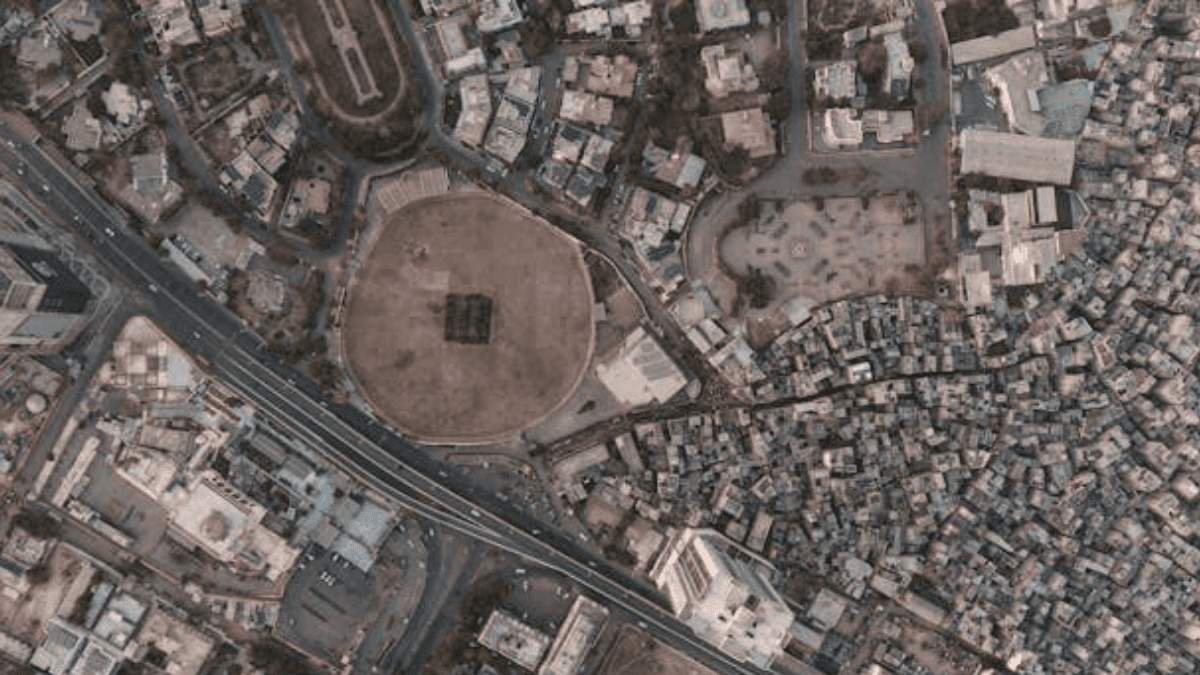
Constructed in 1965-1966, Iqbal Stadium, Faisalabad, is famous at the international level. Many International players had to play different matches there. First, its name was Lyallpur Stadium, then it changed to International Stadium. After that, it was renamed as Iqbal Stadium in honor of Allama Iqbal. In October 1978, Iqbal Stadium was inaugurated. In 1978, a one-day test match was played between Pakistan and India.
Hence, Iqbal Stadium ranks as a test match. In 2005, the Government of Pakistan managed the investment for the progress of the Stadium and set nightlights here. In 2011, an electronic board was also fixed there. In 1984, the First One-day Cricket Match series was played between Pakistan and the New Zealand Cricket Teams. In April 2008, the Last One-Day Match series was played between the Pakistan and Bangladesh Cricket teams.
In the Iqbal Stadium, there are 24 test series and 12 One-day Series matches. The Champions One-Day Cup, featuring the 150 best cricket players, will be held from September 12 to 29, 2024, at Iqbal Stadium, Faisalabad. The PCB announced five teams with their best names. A 50-over match tournament is played in a single-league format.
Hockey Stadium Faisalabad:
It is the third-biggest hockey stadium in Pakistan, constructed in the 1990s. It has a capacity of 25000 people. Located in the middle of the city near Susan Road, its construction was completed over 10 years ago. One part of this playground was constructed in 2002. On 16 April 2003, the Governor of Punjab, Khalid Maqbool, inaugurated the Stadium.
24- Public Libraries:
Allama Iqbal Library:
The British government constructed the Allama Iqbal Library in 1912. At that moment, it was called the Coronation Library. Post-partition, the library was renamed as the Allama Iqbal Library. In this library, the total book collection is 31,783. Urdu literature books, Science books, biography books of the Holy Prophet S.A.W., Quran-e-Pak-Hadith books, philosophy books, economics books, and many books are also available.
Municipal Library:
Municipal Corporation Library Located at Kotwali Road, Iqbal Park, in front of Dhobi Ghat Park, Faisalabad. It was developed in its inauguration on 16 March 2013 AD under the supervision of Nassem Sabir. This library’s total expenditure is 4 million rupees. It has many books, a photo gallery, and a conference center.
25- Lyallpur Museum:
Where is the Lyallpur Museum located?
The Lyallpur Museum originated from the old name of Faisalabad, Lyallpur. Lyallpur Museum is located in Front Of the Faisalabad District Council, near the District Courts, the main campus of the Agricultural University, or accessible by car from Katchery Bazaar.
When was the Lyallpur Museum founded?
The Lyallpur Museum was constructed in 2010 and completed in 2013. Everything in this museum is organized in an orderly manner. This museum preserves the historical heritage of the Sandal bar areas. Ten galleries are arranged decently in that museum.
- Orientation Gallery
- Sandal Bar Gallery
- Local Antiquities Gallery
- Muslim to Sikh Era Gallery
- Chenab Colony Gallery
- Lyallpur Gallery
- Thinking Gallery
- Social Beauty Gallery
- Textile Gallery
- Pakistan Movement Gallery
26- Transport:
Faisalabad Airport:
In 1942, during the British Raj, Faisalabad Airport was constructed. After that, the local government decided to make the Brick strap measuring 5000 by 100′ in 1942.
The leash used for local flights was spoiled. In 1972, a new beautiful parallel runway measuring 9000 feet by 100 feet was constructed West of the existing runway. A new runway was designed to handle big Aircraft such as Boeing 737. In 1974, one jet apron, Taxiway B, an Air Traffic Control building, and a Met Constructed office were built at Faisalabad Airport. In 1985, one Premier Lounge and ILS were also established there.
In 1998, annual Hajj Flights were announced from this Airport, which caused flying and traffic growth for the International Airport. Faisalabad Airport is located in the middle of the city, and its distance from the city is approximately 15 km. This Airport offers cargo freight, passenger travel, a private terminal, a flying school, and a military base officer in Pakistan. The major Flights operate to airports belonging to Pakistan International Airlines, Fly Dubai, Qatar Airways, Air Arabia, Gulf Air, and Serena Air.
Faisalabad Railway Station:
The Faisalabad railway station building, Architectural Creation, belonged to the western side of the Victorian range. Entrances are specified according to the Greek style. The technique of railway station building has adopted the trend from the architects of the Victorian era and the Westerners in the Middle Ages and the Renaissance.
The building presents a beautiful, recognized Western style and narrates many historical stories of its development and construction duration, completed in 1896. Railroad stations, in the past and present, provided the passenger to arrive at their destination, bypassing fields, villages, cities, and huts.
Faisalabad Railway Station was constructed on the Khanewal – Wazirabad Railway Branch and has seven platforms. Faisalabad Railway Station is located at Road train station, Railway Colony, Punjab 54000.
Motorways in Faisalabad City:
- M4 motorways (Pakistan), Pindi Bhatti and Multan
- M3 Motorways (Pakistan) (Lahore) – Abdul-Hakeem
Famous Roads in Faisalabad City:
- Faisalabad –Sanghla Hill
- Faisalabad – Shahkot – Sheikhupura Road
- Faisalabad – Chiniot Road
- Faisalabad – Jhang road
- Faisalabad – Samundri road
- Faisalabad – Jaranwala Road
a- Flyovers:
- Nishatabad Flyovers
- Abdullahpur Flyovers
- Novelty Bridge Flyovers (Approved)
- Tariqa Bad Bridge to Chak Jhumrah Road
- Jhal Khanuana Chowk Flyovers
b- Underpasses:
- Nusrat Fateh Ali Khan Underpass
- Barakat Ali Underpass
- Lyallpur Underpass
- Chenab Chowk Underpass (planning)
- Novelty Underpass (Approved)
- Kashmir Bridge underpass
c- Highway:
Faisalabad Canal Expressway
27- FESCO:
FESCO is the abbreviation of Faisalabad Electricity Supply Company. The state-owned company supplied electricity to Faisalabad, Toba Tek Singh, Sargodha, Mianwali, Chiniot, Jhang, Bhakkar, and Khushab. Fesco Company is situated on West Canal Rd, Abdullahpur, Faisalabad.
The primary purpose of establishing this company is to provide safe and reliable sources of electricity. Yet it is to work out the safe use of electricity in agriculture, industry, and houses. FESCO, the ex-Wapda distribution company, is owned by the government of Pakistan. On 21 March 1998, the company registered as a Public Limited Company.
28- Conclusion:
Faisalabad is a beautiful city with many historical events. Each one who travels the city explores many melodramatic tragedies, which stun visitors. According to the Punjab development statistic report, before 1985, in Faisalabad City, the number of vehicles and industries was approximately 385 and 4919.
Time was passing, and the development of Faisalabad city rapidly advanced. In 2014, the number of transports and industries approached 1890 and 1,038,083. But in 2024, it has not ended yet; the number of vehicles and factories is increasing rapidly.
FAQs:
1- What is the abbreviation of FESCO?
FESCO is the abbreviation of Faisalabad Electricity Supply Company. This company is responsible for providing electricity to many cities, such as Faisalabad, Toba Tek Singh, Sargodha, Mianwali, Chiniot, Jhang, Bhakkar, and Khushab.
2- Clock Tower Eight Bazaar, which country?
Clock Tower Eight Bazaar’s design structure resembles the symbol of the Union Jack. Each bazaar has its specific importance and value.
3- Why is Faisalabad Famous as the Manchester City of Pakistan?
Faisalabad is known as the Manchester of Pakistan because it is home to many textile industries.