Islamabad | Best Places to Visit | Things to Do & Local Tips 2026
Capital Smart City Islamabad is renowned as the Brasilia (the capital of Brazil) of Pakistan. The capital city of Pakistan is furnished according to one’s desire. The attractiveness, charming beauty, and marvelous places of Islamabad are appreciated, and the attitude is admirable. There are many beautiful places to trail in your leisure time, such as the Trail-5 Hiking track, Lok Virsa museum, Pakistan Monument, Rawal Lake, and more captivating places. If we talk about food, there are numerous dishes in various varieties and recipes. The environment and weather are pleasant. If anyone is fond of shopping, please come to Islamabad and visit a lot of shopping malls.
The beautiful Islamabad is a gorgeous city surrounded by the Margalla Hills. Many people have visited Islamabad many times and have outstanding knowledge about it. Many people have a chance to visit Islamabad, but don’t have information about the city. In this blog, we try our best to explore the most remarkable and informative places. We authentically describe the fantastic sights of Islamabad so that each one can easily visit Islamabad in an advanced style.
Table of Contents
1- Islamabad City
2- Islamabad, a Planned City
3- Ancient Time Islamabad City
4- Location of Islamabad
5- Climate of Islamabad
6- All Islamabad Capital Territory Zones
7- Islamabad Five Zones
8- Festivals
9- Famous Cuisine restaurant
10- Religion
11- Population
12- Literacy rate & Language
13- Shopping Malls
14- Top Quality institution in Islamabad City
15- Tourist Attraction Places in Islamabad
16- Roadway access to Islamabad
17- Most Renowned Roads and Expressways in Islamabad City
18- Islamabad Railway Station
19- Islamabad International Airport
20- Conclusion
1- Islamabad City:
Islamabad, the Capital of Pakistan, found in the Province of Punjab, is a well-planned city. It is famous due to its beautiful surroundings, foliage, and lush green hills that are overwhelming. The ninth-largest city of Pakistan is furnished as a well-planned city that narrates many incidents of its development.
Islamabad City is famous for its beauty all over the world. Let’s! We describe the Capital of Pakistan, but it is necessary to inform you that when Pakistan came into existence, the first Capital of Pakistan was Karachi. Over time, the population of Karachi City has increased constantly. Any country must have its capital near other cities.
However, due to overpopulation and from an economic standpoint, the capital was transferred to Rawalpindi city. Karachi remained the Capital of Pakistan till 1958. President General Ayyub Khan ordered the construction of a beautiful metropolis near Rawalpindi City in 1958. Hence, the construction of the metropolitan city was incomplete; Rawalpindi was praised as the Capital of Pakistan in 1958.
2- Islamabad Well-Planned City:
Although Islamabad was declared the Capital of Pakistan, the city’s construction procedure followed a well-planned procedure. The construction of Islamabad began in 1960 AD. Islamabad became the Capital of Pakistan on 14 August 1967. Only exclusive architects are employed for town planning. For this purpose, a Greek firm, Constantinos Apostolou Doxiadis, was contacted, and the map prepared by it was approved.
According to the map, Islamabad is divided into eight different Zones. Thus, separated areas are designated for diplomatic, commercial, educational, industrial, and other purposes, and space is allocated to shopping areas and parking in each sector. Over time, there was innovation in the construction of Islamabad, and this beautiful city is blessed with many historical and official buildings.
On the Eastern side of Islamabad, the beautiful Mountains of Murree are fascinating and inspiring due to the attraction of greenery to the visitors. Since Karachi was a corner of the country, President Ayub Khan wanted to make the capital of Islamabad connect various cities. Secondly, the royal residence of all Countries is located far from the borders and in the middle of the country, so it decided to make Islamabad the capital. Apart from this, another main reason was that the headquarters of the Pakistan Army was also in Islamabad.
3- Ancient Time Islamabad City:
Before the construction of Islamabad, the population was approximately 160 people. Famous Villages of Islamabad are Shakarparian, Bari Imam Noor Shah, Saidpur, Sri Saral, Golra Sharif, Bag Bataan, Malkan Paans, Khader Khotta, and a few others also constructed.
4- Location of Islamabad City:
The old name of Islamabad was Pothohar region, replacing it with Islamabad (meaning city of Islam or peaceful city) since Pakistan is an Islamic Republic. Islamabad is located in the Province of Punjab, Pothohar Plateau, on the Eastern edge, at a distance of Rawalpindi, about 14km, at the foothills of the Margalla Hills, the Capital of Pakistan. Rawalpindi and Islamabad are famous as twin cities.
Murree and Kotli Sattian are located on the East side of Islamabad. At the north side of Islamabad, the District Haripur of Khyber Pakhtunkhwa is located. To the east, north of the cities are Kahuta, Gojar Khan, Kallar Syedan, Rawat, and Mandrah. The northwest side includes Texila, Wah Cantt, and District Attock, and Rawalpindi is located on the southern and western sides. The total area of Islamabad City is 906 square kilometers. The height of Islamabad reaches 1,663 feet above sea level, and the topmost point records approximately 5,196 feet.
On the globe, Islamabad is situated at the Northern latitude of 33.68’44°N, and the Eastern longitude is 73.04′ 79° from Greenwich.
5- The Climate of Islamabad City:
The atmosphere of Islamabad is pleasant, moderate, and humid. The atmosphere of Islamabad changes approximately every month due to the pressure of the west winds. Summer starts in May and terminates in August, about three months. The hottest month is June, and its temperature reaches 37°C.
January is the Frostiest Month, and its humidity is winter is a chilly month,
But sometimes its temperature fluctuates when western wind turbulence occurs, and it causes precipitation as a result of the temperature dropping. Summer is the hottest month, and many sandstorms come to Islamabad in May and June.
The maximum temperature in June is 46.1°C, and the minimum is 38.1°C. In January, the maximum temperature is -6.0°C, and the minimum is 2°C.
Monsoon rains are torrential in Islamabad. If the western winds collide with the climate of Islamabad, it causes heavy rainfall. Due to this, the risk of flooding increases. Over the years, the temperature of Islamabad has changed due to western winds.
6- All Islamabad Capital Territory:
Islamabad Capital Territory is divided into eight zones, which are
- Administrative Zone
- Commercial District
- Educational Sector
- Industrial Sector
- Diplomatic Enclave
- Residential Areas
- Rural Areas
- Green Areas
7- Islamabad Five Zones:
a- Zone I
b- Zone II
c- Zone III
d- Zone IV
e- Zone V
a- Zone I Introduction:
Zone I consists of progressive development sectors; all infrastructure buildings exist in red zones, such as the Pak Secretariat, Prime Minister’s House, President’s House, Supreme Court, and other well-known places, also found here. Islamabad City Zone ‘I’ has an area of approximately 54,958.25 acres.
All famous sectors are organized cordially through this zone because of its beauty, attracting famous people internationally. Declining sectors within Zone 1 include all sectors from I-8 to I-13, H-8 to S-13, G-5 to G-14, and F-6 to F-14, so come to the zone. In that zone, the pilgrimage site of the shrine of Golra Sharif is located.
The attractive buildings of Pakistan, which are recognized globally, can be visited in that zone, such as the Pakistan Monuments, Faisal Masjid, and Folk Heritage. Hence, all Luxury facilities are available there. Commercial Hub Boulevard, Aab para Market, F-A, F-10, and many other commercial sectors are located in Islamabad and are all found in Zone One.
b- Zone II Introduction:
The total area of Islamabad Zone II is 9,804.92 Acres. Zone II consists of an underdeveloped region that is connected to the New Islamabad Airport. Colonies around the new airport are named Fazaia Colony, Wapda Colony, Multi Garden, D17, University Town Islamabad, and Capital Smart City, connected to New Islamabad Airport. Motorway is on one side of the zone, and GT Road is on the other side of New Islamabad Airport.
c- Zone III Introduction:
Zone III is the most charming and attractive area of Islamabad City due to its lush green Margalla Hills and other beautiful buildings. This zone’s beauty needs no definition. There is a point of interest in tourist attractions. The trip to Islamabad is incomplete if they don’t go there. Comprising 50,393.01 acres of land provides an essential part of beautifying that zone.
The fascination of Mrgalla’s lush green hills charms the tourists magically. Surrounded by greenery, the Margalla Hills attract tourists from far away, and the valleys spread around them beautifully. The walking tracks in the Margalla Hills attract tourists from miles away. You can amuse yourself here with Bruti waterfalls, hiking trails at Margalla Hills, Shumber Waterfalls at Margalla Hills, Damn-e-Koh, Margalla Hills National Park, and many other surprising places.
When you visit Pir Sohawa, you can enjoy refreshments at Monal Restaurant. Be sure to explore the Pine City Waterfall, High Land Resort, and other attractions in that zone. Don’t miss the Shah Allah Ditta Caves and other popular tourist destinations. Many people have even purchased plots in the residential areas here. Everyone will be amazed by the enchanting beauty of Dino Valley.
d- Zone IV Introduction:
Islamabad Zone IV is the biggest of all the other zones. It covers a total area of approximately 69,814.35 Acres. Associated with the housing society, Park View Society is the best place to live. Park View Society is located at the foothills of Margalla. International Resources has provided services in terms of residential and commercial services in society.
Simly Dam, Rawal Dam, and Lake View Park are located in Islamabad Zone IV. In this area, you can observe the main categories of Farmhouse planning and design. The main farmhouses are Naval, Bahria Agro Farms, Gulberg Green Farms, and Chak Shahzad Farmhouses. Many small plots are also available for residence.
e- Zone V Introduction:
Zone V has spread over Faizabad to T-Chowk, and the total area of this site is 39,029.45 Acres. The Soan River flows into Islamabad City through Zone V. There are 20 major housing societies, such as Bahria Town, D.H.A., Al-Hamrah, Olive Garden, and Jinnah Jarden.
8- Festivals:
The growth of any city is reliant on commerce. Islamabad, the capital of Pakistan, hosts numerous festivals throughout the year that help promote and celebrate Pakistani culture. In this way, people learn about many beneficial principles of any merchantable product or service through their experience. Islamabad hosts numerous festivals that offer people ample possibilities to invest and express their trade views.
Shaz K& A & S Exibition:
This exhibition is well-known and offers outstanding opportunities to many traders. A celebration for the Shaz K&A&S exhibition, dedicated to the fashion industry, will be held in June at Ensemble Apparel’s shop. At the exhibition, guests can enjoy cuisine and live fashion shows accompanied by music. As someone who trades in garments, there’s a chance to expand your business and increase your profits.
Chand Rat Mela:
The Chand Rat Mela is a vibrant festival held at the Ten 11 Lounge in Islamabad in mid-June. Known for its colorful atmosphere, it attracts many visitors and is a celebration of local culture. The event features performances by famous artists and bands from Pakistan, making it a unique experience for tourists and locals alike.
Traditional Calligraphy Festivals:
The art of creative writing is more significant, and the writer captures the conceptualization. A traditional writing Exhibition has been scheduled in “The Lock Virsa Museum”. Calligraphy is an art. Using this art, various artists highlight the country’s cultural heritage, Quranic verses, and Islamic content. People can come here and see the calligraphy of calligraphers designed in a new and modern way. Arts can see calligraphy designed on leather, copper, pieces of wood, and precious metals.
Literature Festivals:
Literature Festivals, which began in April 2013, have achieved great success after the progress of Karachi Literature Festivals and Children Festivals in Lahore. It is organized in Islamabad under the name of “Literature Festival” to highlight the literature and study the analysis of writers. Pakistani writers, poets, and novelists, as well as international writers, also participate in these activities. This exhibition contains Lectures, Poetic evenings, readings, and art-related exhibits.
Music Festivals on 14 August:
Pakistan came into existence on 14 August 1947. In Pakistan, many functions are held in different places, narrating the story of Independence and describing in detail how Pakistan came into being after the sacrifice of many people. A music festival is an “Inaugural Event” in the wake of Independence Day.
14 August is the Independence Day of Pakistan. A music festival is organized in Islamabad to celebrate Independence Day, which starts on 1 August and ends on 13 August. On the evening of 13 August, the music festival celebrates Independence Day in a new way by organizing the most outstanding music program according to the schedule.
Spring Food Festivals:
Islamabad Lakeview Park hosts an exhibition renowned as the “Spring Food Festival” in mid-April, where many restaurants are present and participate in cooking competitions. Several local cafes, bars, and restaurants participate in this event and serve the best food as an excellent means of their growth.
Apart from this, there are available Pakistani and foreign languages, such as Chinese, Hindi, and European. “National Music Festival” is also organized on the same days. Since April, the spring season, flower display has also become an essential part of this festival. During this time, soldiers’ parades were associated with musical bands on the streets, which became a cause of increasing the beauty of the roads.
9- Famous Cuisine Restaurants:
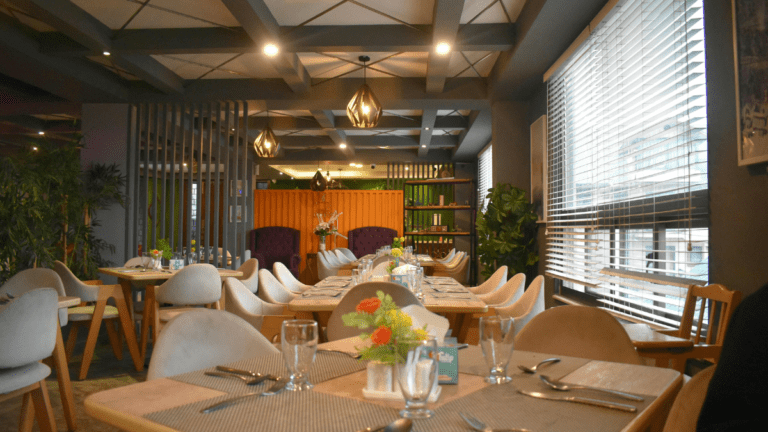
In Islamabad, many restaurants are experts in cooking to provide the best food. But here we will mention some famous restaurants. After eating their food, you will want to go again and eat from there.
The Monal Restaurant:
The ‘Monal Restaurant’, 9 km from Pir Sohawa in Islamabad, is located at the top of the Pothohar Plateau. When you visit there, observe the green plants of ‘Margalla Hills’ that visibly look through the ‘terraces’ of the Hotel. Monal Restaurant offers genuine Pakistani, Thai, & grill cuisine in a unique style, which provides instant quality and savor. The restaurant is beautiful and furnished with fresh air and a stunning view of Islamabad. The indoor & outdoor dining hall is made of glass so the public can enjoy the beautiful sight.
Meals:
Breakfast, Lunch, Dinner, Brunch & Late Night
Asian Wok Restaurant in Islamabad:
Children and youngsters are crazy about eating Chinese Food because its unique style and low spiciness provide an unbelievable taste. To make advantageous and different dishes in an authentic and expressive style is a strange passion.
Each one can try many Chinese dishes from various unique restaurants. If you enjoy unusual delicacies tasted in healthy versions, let’s visit a new restaurant in Monal, Islamabad, named ‘Asian Wok’, built in the Beverly Hunter Blue area in Islamabad. It provides a great option to eat Chinese, Thai & Japanese food.
“Asian Wok Restaurant presents a pure and attractive environment, with furnished table area and unique dishes in a judicious taste. It also provides comprehensive protection and offers Texas Free Drinks.
Meals:
Lunch & Dinner.
Ox and Grill Restaurant in Islamabad:
If you have any ideas for steak food, we recommend you visit “Ox and Grill Steak House” in Islamabad. The restaurant provides better steaks with an extra-rich taste. When you enter the restaurant, you observe, and you will see the Western motifs covering the entire wall, marking the establishment, which enhances the ornamentation of the restaurant. It is located at College Rd, Sector F7, Markaz Islamabad.
The restaurant offers various burgers, Steaks, Mexican, Pakistani, Thai, and Chinese food. The staff is cooperative when they order a dish, so garlic bread is served during the food preparation.
Meals:
Lunch, Dinner & Brunch
Yum Chinese and Thai Restaurant in Islamabad:
After achieving outstanding success, Yum opened its restaurant in Islamabad. Enjoy authentic Chinese and Thai dishes at this place. Yum Restaurant is located on Street 16, F-7/2, Next to Rana Market, Islamabad. Yum Islamabad offers a High Tea Buffet daily from 3:30 PM to 6:45 PM in a gorgeous style.
Meals:
Lunch & Dinner
1969 Restaurant in Islamabad:
The purpose of the 1969 restaurant is to provide good food to the visitors, besides remembering the events of 1969. Thus, the future generation is attached to the memories of their past. The 1969 restaurant is decorated with beautiful, picturesque lawns, giving a delightful and unique feeling to the visitors who come here for entertainment. The 1969 restaurant aims to relive the golden memories of Pakistan during the 1960s. This restaurant is famous for serving Pakistani and continental food.
The restaurant is situated on Garden Avenue, Shakarparian, Islamabad. The restaurant was established in 2010 with ancient stones in a luxury style. The restaurant provides the facility of green lawn marriage ceremonies, birthday parties, bridal showers, and many other family functions. The restaurant has a variety of Pakistani and Asian cuisines.
Meals:
Lunch & Dinner
Bar. B. Q Tonight Islamabad:
Bar. B.Q Restaurant is situated on “Embassy Road, Block A.G6/3, Blue Area, Islamabad. The food in this restaurant is prepared with fresh and quality spices. The menu of this hotel is served only after preparing the food according to the rules of hygiene. The taste of food at this hotel, in Islamabad, is better and standard than many hotels. However, this hotel is famous for serving the best barbecue.
Menu of the Restaurant:
- Chef’s Recommendation Recipes
- BBQ Specialists & Starters
- From Our Tandoor
- Bar. B.Q. Dishes & Steak House Specialist
- Afghani & Middle Eastern Specialist
- Seafood Specialist
- Dessert Varieties & Beverage
Zamana Café Islamabad:
Zamana Café is located in the Serena Hotel. The dining establishment serves breakfast, lunch, and dinner in buffet style with an à la carte menu. Choose from the à la carte menu for lunch or the dinner buffet, which offers a variety of specialty dishes and indoor seating. The food tastes according to Pakistani cuisine and continental favorites.
The Sunday brunch offers Thai, Italian, Japanese, Chinese, Middle Eastern, and Western cuisines and traditional Pakistani dishes. You can also choose to try 1st cooking dishes through live cooking stations. After cooking, the food is delivered directly from the pan to the plate.
Meals:
Breakfast, Lunch, Dinner, Brunch.
Des Pardes Restaurant
Des Pardes Restaurant offers an exquisite fusion of flavors from Pakistani, Italian, and Chinese cuisine. It provides the best taste of Mughlai cuisine with a flavorful, authentic taste. Grilled platters are a must-have option on their menu. When Des Padres Restaurant launched in Islamabad 8 years ago, the cuisine was assembled with its original recipes. Des Pardes Restaurant is located at the base of Margalla Hills, Mughal Era & to the east of Damn-e-Koh in Islamabad.
Meals:
Lunch, Dinner, and late-night food facilities.
Texas Steak House Islamabad:
“Texas Steak House” is located at 7 East Road, Block H, Islamabad. The steaks are grilled over an open flame to preserve the natural flavors. This procedure makes the meat juicy and tender. There are many more dishes on the menu. Texas Steakhouse has an extensive menu for its guests.
You can order any dish according to your choice. In addition, grilled chicken, burgers, and a variety of salads and seafood are offered. The Waiters, garbed in check shirts and khakis, along with cowboy hats, and the restaurant decorated with ropes and metal saddles on the walls, increase the interior design.
Menu:
- Just for Starters & Soup & Salad varieties
- Varieties of Sandwiches & Burgers & Mexican
- Texas Steak House & Flame Grilled Chicken varieties
- Seafood & Italian Recipes & Mouth-Watering Dessert
- Barista Selection & Cocktails & Cold Beverages
Tahir Khan Restaurant:
Tahir Khan Restaurant, located on Lehtarar Road in Taramri, Tarlai Kalan, Islamabad, is renowned for its Pakistani and Afghan cuisine. The restaurant specializes in a desi twist on traditional dishes, with a particular highlight being its mutton Dum Pukht, prepared in a flavorful and distinctive style. Each dish is prepared with health-conscious practices in mind, and some recipes are tailored to suit Pathan’s tastes.
Menu:
- Kabuli Pulao
- Special Karahi & Beverages
- Dum Pukht & Kada Dum Pukht
- TKR Special Platter & Matka Mutton
- Salad & Seafood & Soup
- Chapli Kabab & BBQ.
10- Religion:
Islamabad is home to many Pakistanis due to its better facilities and the stunning beauty of the Margalla plateau. The religious and cultural diversity here is quite ancient. Ancient cultures and civilizations can still be seen in this area. Islam is the largest religion in Islamabad. The Muslim population in Islamabad is 95.53%, and the second religion is Christianity, which has reached 4% of the population.
11- Population:
Islamabad, located in the Federal Capital Territory of Islamabad, has a population increasing rapidly due to its attractions. The total area of Islamabad covers a surface area of 906.5 km (350.0 sq. mi). The Population of Islamabad has increased rapidly since 1950, when the total population of Islamabad was 36,466. According to the 2017 census, the Population of Islamabad reached 1.015.
While according to the 2023 census, its estimated population has reached 1,232,447. In 2024, the current metro area population of Islamabad is 1,267,000. A dynamic city, Islamabad, due to its beauty, modern architecture, and unique living style, has achieved the forefront of development among the most diverse cities in the country.
12- Literacy Rate & Language:
Islamabad has the highest literacy rate at 88%. In Islamabad, 10% of the population has a graduate degree, while 52% have a master’s degree. The education system of Islamabad consists of 10 recognized universities. Apart from this, 65% of the population of Islamabad is composed of Panjabi people, while Urdu-speaking immigrants are 14%, Pashtun 10.51%, and Sindhi, Kashmiri, Balochi, and other spoken languages are 7%.
13- Shopping Malls:
A shopping mall is a large building that typically contains a variety of stores, including a food court, as well as a parking area. In Islamabad, numerous shopping malls have been established, each offering unique recreational facilities. In this discussion, we will focus on two shopping malls that provide exclusive services.
A- Giga Shopping in Islamabad:
Giga Shopping Mall is located at Main Grand Trunk Road, Defense Housing Authority Sector FDHA phase II, Islamabad Capital Territory. It presents a charming and outstanding look of its construction that enhances the attractiveness and unique look for tourists. Actually, in 1959 Haji Abd-ul-Rahim Giga Pardesi founded the Giga Projects in the United Arab Emirates. Now, his grandson, Mr. Najeeb Ameen Giga Pardesi, established Giga Mall.
Giga Mall is beneficial and provides better facilities in the twin cities (Islamabad and Rawalpindi). Giga Mall, the largest shopping mall in Islamabad, which opened in August 2016, is one of the main projects of Real Estate Developer Giga Groups of Companies. Giga Shopping Mall presents local and International 200+ clothing brands, an attraction for tourists.
a- Facilities:
Giga Mall provides many facilities to its customers, such as Free Wi-Fi connection, a chair facility, Prayer rooms, cuisine restaurants, children’s entertainment points, ATM facilities of various banks, a facility for changing international currency, a parking area, a kids’ play area, and also arranges many activities for entertainment and fun. Giga Mall also provides many facilities to its customers, which attract national and international tourists at the same time.
- Fun City
- Movie Theater
- Avitourism
- Food Bazaar & Restaurants
- 267 Deluxe Hotel rooms
- Escalator Facilities
B- Centaurus Shopping Mall:
Located at 4 Jinnah Avenue, F-8/4 F-8, Islamabad, the Centaurus Mall is evidence of the splendor of its unique construction. The specific, stylish building attracts Pakistani as well as foreign tourists. The construction of Centaurus started in 2005 and was completed in 2015, while the Centaurus Mall opened on 17 February 2013 for business and residential services.
British Architectural Company WS-Atkins has an award for the design of those luxurious skyscrapers, participating in the construction of many famous buildings in the world, and constructing the beautiful rising Burj-Khalifa in Dubai. Sardar Builders(Pakistan) and Pak Gulf Construction participated in the Centaurus Mall architecture. The building has a three-tower structure that provides Residential apartments, cooperative offices, Shopping malls, Five-star hotels, etc.
The Centaurus Mall offers a play area in the name of a fun city, where children and adults participate in many games. ‘The Centaurus Cineplex’ is a movie theater that shows many Hollywood & Lollywood movies. The Centaurus provides the facility for traders to invest their payment in many beneficial projects.
The Centaurus Mall three-tower structure is a 36-story Hotel, 23-story offices, and a 5-story Shopping mall that provides all facilities to its customers. The mall has provided the facility with entrance fees to avoid overcrowding in the mall. Their charge rates can change due to many policies. However, they adopted a policy that government servants don’t have to pay the entrance charges.
a- Employers don’t expend Entrance Charges:
- Teachers
- Doctors
- Gulf Team player
- Football team player
- Cricket team player
- Women & children whose ages are less than 12
- Journalists
- Lawyers
- Foreign & Lawmakers, etc.
b- Facilities:
- Deluxe apartment
- Wi-Fi facility
- Health Club Center
- Shopping mall
- Parking area
- Lifts & Elevators
- Exclusive Entrances
- Food Courts that provide Chinese and Italian cuisines.
14- Top Quality Institution in Islamabad City:
Universities:
- Nust (National University of Science and Technology) Islamabad
- Comsats University Islamabad (CUI)
- Quaid-i-Azam University Islamabad
- Allama Iqbal Open University, Islamabad
- International Islamic University Islamabad
- Bahria University Islamabad
- Air University Islamabad
- Fast National University Islamabad
- Numl (National University of Modern Language) Islamabad
- PIEAS (Pakistan Institute of Engineering & Applied Sciences), Islamabad
- Riphah International University, Islamabad
- The Institute of Space Technology (IST), University of Islamabad
Top Colleges:
- Pak-Turk Maarif International School and College in Islamabad
- Bahria College Islamabad
- Islamabad College for Girls (ICG) F-11/3
- OPF (Overseas Pakistanis Foundation) Boys College, Islamabad
- Scienta Vision College, Islamabad
- Fazaia Inter College (FIC) E-9, Islamabad
- Islamabad Model College for Boys, F-7/3 IMCB, Islamabad
- Institute of Islamic Science, Islamabad
Top Schools:
- Preparatory School Islamabad
- Froebel’s International School
- Army Public School and College
- Beaconhouse School System
- Schola Nova
- Super Nova School
- Roots International School
- The City School
15- Tourist Attraction Places in Islamabad:
Islamabad, the Capital of Pakistan, is a phenomenal and fascinating place where visitors don’t show boredom or dullness. Many historic and attractive places in Islamabad attract and fascinate holidaymakers to visit and travel. Hence, we describe some marvelous attractions.
Dino Valley:
Citizens are enthusiastic to get a more detailed description of dinosaurs and identify their lifestyle, roaring, and the sounds of animals. Many people watch movies and cartoons about Dinosaurs and are more crazy about reading novels and other writing materials about Dinosaurs’ lifestyle. Dino-City Valley is a tourist attraction, a place with a cafeteria that provides many adventures for children, situated in Margalla Hills National Park in Islamabad.
This valley was established in 2007 by the Capital Development Authority (CDA) for animation and many co-create activities.
In Dino City, one can observe that there exist many dinosaurs that can act in many different fields and inspire the visitor to have a sense of the realness they came into the Dinosaurs’ habitat. People can see the Dinosaurs performing many functions, such as musical bands, catching cars, earsplitting, and other intriguing tasks, so visit there and see and capture your photos with the Dinosaurs.
Many animals, such as Dinosaurs, Gorillas, woolly mammoths, and pythons, make the Dino Valley more beautiful and pleasant. Going from downstairs to the top offers a unique way to see the various animals and especially the beauty of Islamabad from all sides, which is a little hard to pin down.
Damn -e- Koh:
Damn -e- Koh in Islamabad is so amusing, and the glamor of its unique calm and indescribable sweetheart is fantastic. It convinces and admires tourists and provides imaginative views encompassing all sides of Islamabad. The height of Damn-e-Koh from sea level is 2400 ft, and Islamabad is positioned at 500 ft. Damn-e-Koh is the mixture of two words: Damn, which means middle, and Koh recalls Mountain.
Damn-e-Koh is magnificent and distinguished due to its unique construction. It provides authentic visibility to its tourists so that individuals can easily stand there and visit all the surroundings of Islamabad. On the southern side of Damn-e-Koh, there is a telescope, so visitors, when they arrive, can approach the city areas. Rawal Lake, which has splendid nobility and furnishes a picnic spot, can easily be visited by standing on the top of Damn-e-Koh.
When you gain the right side of Damn-e-Koh, observe the sixth-largest Mosque in South Asia, famous due to its glorious construction and beauty, which surrounds the Margalla Hills. In 2017, to attract tourists, the authorities renovated the Dam-e-Koh, providing many instructions, such as Islamabad’s initial map, which furnishes many facilities, to its visitors. Damn-e-Koh Point is located in Islamabad Sector E-6 at the top of the hills.
The visitors can enjoy national and international cuisine. If anyone wants to cook food individually, they’re offering an exceptional opportunity to make food, so let people picnic there. In the Damn-e-Koh Authority-organized parking garage, visitors don’t face any problems.
Shah Allah Ditta Caves:
a- History:
Shah Allah Ditta Caves review the history of ancient times, when many religions offered their religious aspect in those caves. That cave’s magnitude is very historical. The Village famous as the Dervish of Shah Allah Ditta belonged to the Mughal period. It is considered that caves were old up to 700 years ago, but the viewpoint is that Caves are about 2400 years old because, during that era, Buddhist Morals could be visible on cave walls.
b- Location:
Shah Allah Ditta caves are located in Islamabad at the foothills of Margalla Hills in Sector D-12, encompassed by lush green fields. Shah Allah Ditta village belongs to ancient times, and the caves attained magnificent importance due to their historical significance, narrating the story of all religions. In the 16th century, when Rawalpindi City came into being, a road was constructed that passed near Shah Allah Ditta Caves, which directly led to many cities such as Kabul, Peshawar, Hassan Abdal, Rawalpindi, and accessed Lahore and Delhi. The road is the famous GTRoad (Grand Trunk Road) in history. That road vanished, but its construction sign remained.
c- Virginity of Caves:
All religions considered the purity of caves, such as Islam, Buddhism, Hinduism, Jainism, and Sikhism, in their respective times. Many famous historical personalities, such as Alexander the Great, Chandragupta Maurya, Ashoka the Great, Kautilya Chanakya, Hazrat Khawaja Moin-ud-din Chishti, Data Ali Hajveri, Sher Shah Suri, and the famous Mughal Emperor Jahangir, respect the caves and take rest there during their journey. Many monks, Jogi’s, and mystics have spent their time here.
d- Caves stones:
During the Mughal period, a Dervish named Shah Allah Ditta came here and worshiped in the garden and was laid to Rest there, and since then, these caves have been famous as Shah Allah Ditta Caves. These caves, made of kanjar stones, are 8 meters high, 40 meters long, and 60 meters wide, and surround a wide area. A spring, a pond, banyan trees, and a garden are still near these caves. Now, local people’s opinions are that there is horrible noise during the night, and these caves are creating a mysterious atmosphere.
Faisal Mosque, Islamabad:
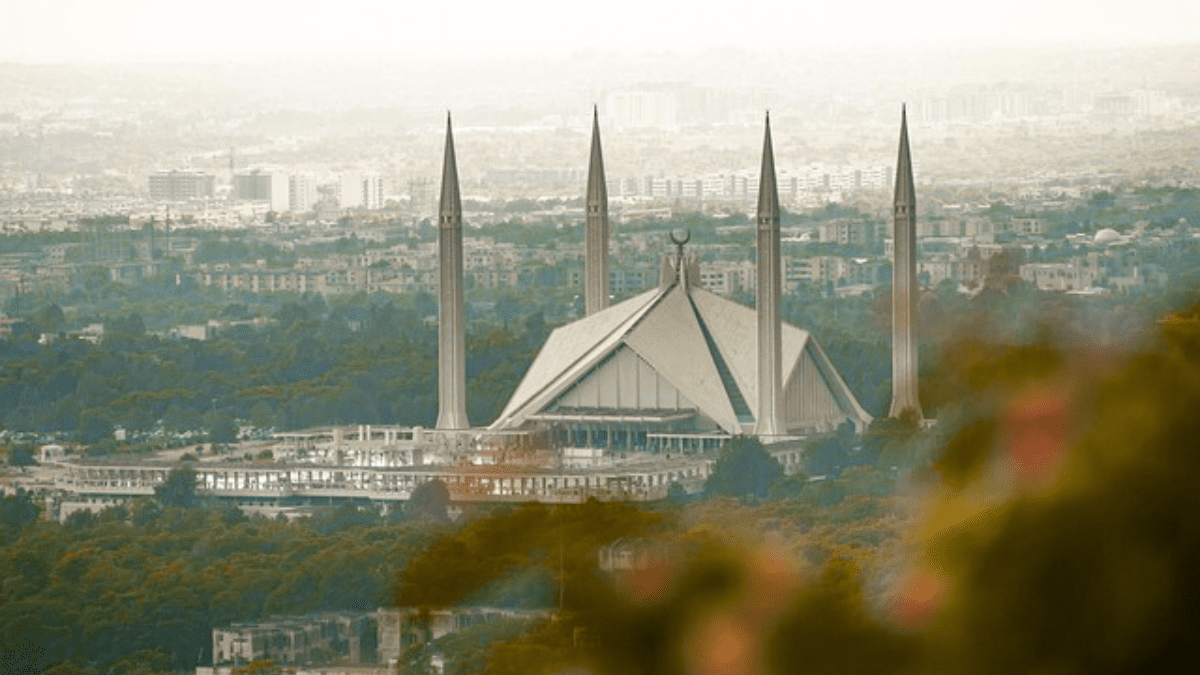
Faisal Mosque in Islamabad is famous all over the world due to its unique style of construction. Faisal Mosque is the sixth-largest mosque in the world in terms of area in the continent of South Asia. The design of the mosque, created by Vedat Dalokay, was influenced by Arabic tents. The Faisal Mosque is surrounded by the beautiful greenery of the Margalla Hills. Each one can observe its magnificent construction.
Shah Faisal had a dream to construct a Masjid in Islamabad, a tribute to a unique design in the Margalla hills. The Saudi King also took responsibility for all the expenses. Faisal Masjid is known as a national mosque. When Shah Faisal was martyred, the rulers of Pakistan named this mosque after Shah Faisal on November 28, 1975.
The construction of the Shah Faisal Mosque began in 1976 under the supervision of Azam Khan. The Saudi government gave 130 million Saudi Riyals (120 million US dollars) for the construction of the Faisal Masjid. The building of the Faisal Mosque was completed in 1986. The first prayer was offered on June 18, 1988, in the Faisal Masjid.
Rawal Dam:
Rawal Dam provides fantastic beauty and enhances the need for water resources. Rawal Dam is located in Islamabad at the foothills of Margalla and Murree Hills across the Korang River. Its distance is about 10 km from Rawalpindi city.
Rawal Dam, the source of water resources, was constructed in 1962. The artificial resources of water help fulfill the need for water for Twin City citizens. It spans an area of 8.8 square kilometers.
The Rawal Dam was constructed to fulfill the needs of the twin cities, i.e., Islamabad and Rawalpindi. Freshwater resources are a blessing of Allah Almighty. So we should be more grateful to our Allah Almighty. Rawal Dam covers approximately a total area of 268 km2, contributed into three categories.
The total depth of Rawal Lake is 31m. The Bani Gala Bhara Kahu, Mallpur, and Noorpur Shahan are close villages to Rawal Lake. Murree Hills, Chattar Park, and many other beautiful and renowned places that, on the one hand, attract tourists, yet on the other hand, create immense conditions of pollution. Rawal dam can store a water capacity of 47,500 acre-feet with a maximum flood level of 1752 ft.
It is also located at Rawal Lake in the same location at an altitude of 1,800 m, a Longitude of 73◦07 E, a Latitude of 33◦42 N. Rawal Dam Catchment territory can be divided into three specific zones: Noorpur, Kurrang, and Shahdara.
The eight gates of the spillways of Rawal Dam can discharge 80,000 cubic feet of water per second.
The water from the dam can be helpful to fulfill the water demand of the population density of Rawalpindi and Islamabad. The lake is primarily fed by spring snow melting and forty-three small streams.
a- Activities:
- Hiking
- Boating
- Fishing
- Photography
- Water Skating
b- Wildlife:
- (Rahu, Thaila, Mori, Carp Fish, Doula, and Talapia).
Mammal species include the Indian pangolin, jungle cat, Persian jackal, Central Asian boar, red fox, Indian crested porcupine, and yellow-throated martin.
Margalla Hills National Park:
The word Margalla originates from two words, ‘Mar’ and ‘Galla’. The Mar means snake in Persian and Pashto, and Galla means home. Margalla Hills National Park was declared a national park under the Islamabad Wildlife Ordinance (1979) and was established in 1980, vide order no. SRO 443 (1)/80, to protect its natural sites and structure. The Margalla Hills area is located in the monsoon zone, where overall 254 mm of monsoon rainfall occurs between July and August.
Margalla Hills National Park’s record maximum temperature reached 34.3◦C, and the minimum temperature reached 3.4◦C. Rainfall occurs in winter and the moon’s soon season. The hottest months are May and June, while the coldest months are December and January. It is the third largest park in Pakistan, covering a total of 17,386 hectares (42,960 Acres) of land. The highest peak of Margalla Hills National Park is Tilla Charouni, which reaches 1604 m.
There are many tourist destinations in Margalla Hills National Pir Sohawa, including popular hill stations, Dam-e-Koh, a picnic point, Lake View Park, Monal Restaurant, and Shakarparian Cultural Complex.
a- Hiking Trails:
There are a total of 30 trails underused by local people. However, the authorities can only focus on developing six perfectly designed trails.
Trail 1:
Margalla Hills National Park hiking trail 1 is an 8.8-mile (20,000 steps) long route track. It starts from E-8 to E-9, interlinked with other sub-trails. The hard-routed long track reached an elevation of 2345.2 ft.
Trail 2:
Hiking Trail of 2 starts beyond Pir Sohawa Street and ends at Damn-e-Koh. The trail takes 1 to 1.5 hours of hiking to reach the viewpoint.
Trail 3:
Trail 3 is about 2.4 miles (5.75 km) and takes 1.5 hours of hiking to reach the viewpoint. Trail 3 starts from F6/3 Margalla Road and ends at Pir Sohawa. In the middle is a rest place known as Mid Point. The trail might require 2 hours to complete. The elevation gain from the base to the top is 615 meters. There are enough parking places. While tracking, you find stalls and a bench for sitting on the track.
You can explore the Faisal Mosque and enjoy the beautiful viewpoints in Islamabad.
Trail 4:
Trial 4 is located on Pir Sohawa Road near Islamabad Zoo. It is a regular trail of the Margalla Hills National Park. You can find a parking area with high-security services. At Wild Mild Café on Pir Sohawa Road, there is a fixed board indicating the direction of Trail 4. Within 500 meters of the trail, a water stream flows, making it an ideal spot for observation. The best time to view the water is from July to September. Trail 4 is not only beautiful but also adventurous, stretching over 10 kilometers.
Trail 5:
A 6.4 km long track that has to be completed in 2 hours and 10 minutes is a moderate walking path. The track passes through the rugged terrain of the Margalla Hills and presents a charming view of the capital city. The trail starts from the Margalla Hills National Park Visitors Center and reaches the top of the Margalla Hills. When you reach the top of the peak, it depends on whether you know what to do now. You decide to go straight up the path or the left-hand path. If you want to leave the path along the side of the road, then you reach the Monal Restaurant.
Trail 6:
Trail 6 starts E 7 Sector covered behind Faisal Masjid. A 4.5 km-long track reached Chak Jabbhi, the mysterious village at the top of the trail. Then you reach Rigde or Talhar to Monal, and after this, you can go back to your point. Monal and La Montana Restaurant are exclusively 1 km away from this point. The track was currently closed to people. But if you have to be crazy to visit the track, don’t be concerned. Arrange a group tour with Pak Rangers.
They receive Charges per person and help to tour the trail. If you have a plan for breakfast or lunch, then you give some more charges for meals. The track is covered with thick green trees, reminiscent of a forest. You can observe the beautiful birds’ monal pheasant ( the national bird of Nepal) during this track. This track resembles a mysterious situation.
Bari Imam Trail:
The track starts from Main Margalla Rd and ends near a big cave known as Bari Imam Trail.
a- Instruction:
- Please check weather conditions before traveling. The rainy season, from July to September, is slippery and dangerous, posing risks to travelers.
- Keep your bag of mineral water bottles, dry fruits, and snacks.
- Wear the best quality shoes, so your feet don’t get injured while tracking.
- Be sure to make the track clean and pure. All trash is kept in a trash can so the track can present a healthy and beautiful look for new visitors.
- Don’t underestimate a challenging trail, even if you’re fit. The rocky path through thick foliage can be dangerous.
- For safety, keep the first aid kit accessible while traveling.
Lake View Park:
Lake View Park is a marvelous and impressive park that boosts tourism and enhances the rich beauty of the inside park and lakeside during leisure time. The outcome imagines, in reality, that they came into a dream world. Rawal Lake is located on Murree Road, Islamabad, Shakarparian National Park, nearly 11 km from Zero Point in Islamabad.
In 1962, during the era of President Ayub Khan, the Punjab Government developed an artificial lake to control the water shortage for twin cities such as Islamabad and Rawalpindi. The park in Islamabad presents a picturesque view when the CDA takes proper care of it.
The third greatest Walk-in bird aviary in the world is located in Lake View Park, which was inaugurated in 2013 and provides 300 varieties of bird species.
a- Facilities:
- The beauteous garden is covered with lush green plants
- Provide BBQ Point Facilities
- Camping Points
- Playground for people
- Golf Carts & Passengers Road Train
- Fishing facilities
- Boats that visit all the lakeside
- Third Biggest Birds Avery
- Paintball Arena
- Held many festivals in the Arena
- Swimming pool
- Picnic Point
- Ibex Club
- Jumping Centers & Swings & Refreshment Centers
Rawal Lake Park is famous in Pakistan for its beautiful scenery. It fascinates tourists, capturing the scene of the Margalla Hills and providing a viewpoint of the lake.
Saidpur Village Importance:
Saidpur is an almost five-year-old village located on the slope of the foothills of Margalla in the capital territory of Islamabad. This village is famous worldwide for its rich heritage, culture, history, and folklore. Full of natural beauty, the Saidpur village has a unique attraction in its peaceful environment. Its attractive feature is associated with viewing in both the summer and winter seasons. Daytime and evening sightseeing here is a fascinating attraction.
a- History:
Saidpur was founded in 1530 AD by Mirza Fateh Ali. In the past, it was renowned as Fateh Pur Baoli, the name of its founder. When the Mughal Empire Akbar fought against the Suri Empire, the Ghakhar family supported the Mughal Empire Akbar. Thus, as a reward, King Akbar gave the Saidpur to the Ghakhar family.
b- Art and Heritage Culture:
In Saidpur village, one can see the common culture and history of Hindus, Sikhs, and Muslims simultaneously. The Greenwich Village of Saidpur, located at the foothills of Islamabad, has a history. The centuries-old temple and mosque here are evidence of the religious harmony of the city and how much mutual unity and kindness exist among the people. The area’s beauty and simplicity are evident in a clear version. The archeology of this area is of great importance to tourists.
Undoubtedly, the ancient architecture of the village of Saidpur and the stone-built temples, gurdwara, and Masjid are different from other buildings and civilizations. That is why Saidpur is called Art and Heritage. The craftsmanship of Saidpur into a cultural and historical site was launched by CDA in 2006 under the supervision of Chairman Kamran Lashari. It was successfully modified into a beautiful old village in 2008.
The place of Haram Shala has been converted into a gallery. From the planning of the settlement of Islamabad to the picture of the first sapling in the garden, a large gate welcomes visitors to the village entrance. If there are, a few art and craft shops can be visited in the village. Marginally ahead, an ancient mosque with three domes can be seen. Due to a lack of space, a hall has been constructed next to this mosque.
c- Haram Shala Importance:
Apart from the Haram Shala, there is also a temple on its premises. There is an opinion that this temple was built centuries ago, called the Jhansi temple. In front of that temple, a Sikh gurdwara with golden arches was constructed at the beginning of the last century. With this gurdwara, a large room is conceived to have once been a Sikh Madrasah. Saidpur village has gained worldwide fame as an Ojal village. Explorers and tourists from all over the world come to see it.
Pakistan Monument, Islamabad:
Located in Islamabad, Shakarparian, Pakistan Monument resembles a Crescent Moon and Star that leads to the Pakistani flag. It has peaceful and magnificent importance for the visitors and presents a beautiful and fantastic environment. The President of Pakistan, Pervaiz Musharraf, decided to make a monument in Islamabad, Shakarparian, which adopted the magnificent importance, and provided a discernible that narrates the history of Pakistan.
a- Monument Construction History:
The primary purpose of constructing a building is to dedicate it to the martyrs of Pakistan and promote the culture and heritage of Patriotism among Pakistani people. Pakistan Monument was laid down in 2004, but the decision was made that the monument preparation had unique qualities.
In 2005, the Architects and Town Plaza arranged the completion of the Pakistan Monument design, full of attractive charm. 21 Artists from Pakistan participated in the competition, with Arif Masood victorious. In 2006, the Pakistan Monument was completed under the headship of Engineer Syed Muhammad Khalid. Pakistan Monument, known as the National Monument, was inaugurated on 23 March 2007 and consists of 2.8 hectares of land divided into two parts. One represents the Monument, and the second consists of the Museum.
b- Monument Petals Story:
Like a blooming flower, the Monument presents four big petals that elaborate Pakistan’s four provinces, Punjab, Sindh, Baluchistan, and Khyber Pakhtunkhwa. Along with this, three small petals symbolize three states: Azad & Jammu and Kashmir, Gilgit Baltistan, and Federally Administered Tribal Areas. In the company of Zarar Headier Babri and Kusar Jhan, the artists embellish the petals well-crafted and diligently.
The first petal demonstrates the depiction of Faisal Masjid, Islamabad, and Shah Jahan Masjid, Thatta, Sindh. Second, Petals envision the picture of Quaid-e-Azam, Fatima Jinnah, Minar-e-Pakistan, Badshahi Masjid Lahore, and Karakorum Highway, representing the Northern side areas. The third petal describes the delineation of the picture of Allama Muhammad Iqbal, the tomb of Shah Rukn-e-Alam Multani, Peshawar’s Famous Mahabat Khan Masjid, Indus River Delta Plain areas, and the Historical Fort of Lahore.
The four petals of the monument show images of Uch Sharif, Shalimar Bagh, Lahore Sheesh Mahal, Islamia College, Peshawar, Quaid-e-Azam Residency Ziarat Quetta, and Khyber Pass motion picture. The four pillars of the Monument motivate the motto of Quaid-e-Azam, ‘Faith, Discipline and Unity’, which is effective for the nation’s thought. To stand on the backside of the construction of the arch, visit the city in panoramic views.
c- Monument Museum:
The monument museum was constructed in the vicinity of the Pakistan Monument, a distinguished chronicle heritage to the martyrs of the Pakistani People, picturesque from all sides of Islamabad conservation to parity of verdure.
The museum narrates the Martyrs of Pakistan Monument and the struggles of martyrs during the establishment of Pakistan, constructed in 2010.
When you visit there, observe that the museum narrates all historical aspects till 7000 BC to the Arrival of Muslims, the Mughal Empire Period’s Buddhist religion, the Culture of Hinduism, the Pakistan Monument before partition, the story of Partition time, historical books, old Document’s, Islamic Calligraphy Pictures, poetry of Allama Iqbal, Allama Iqbal Quotes, 1865 war’s scene ornament in an astounding and captivating manner.
Multi Garden Zoo in Islamabad:
Multi Garden Zoo is located in B-17, Islamabad. The enthusiastic and beautifully created zoo is the best place for children’s amusement. Thus, the children can have fun and visit the animals. The environment and luxury style of the zoo make Islamabad more splendid.
Margalla Hills National Park hiking trail 1 is an 8.8-mile (20,000-step) long route track that starts from E-8 to E-9, interlinked with other sub-trails. The hard-routed long track reached an elevation of 2345.2 ft.
Roses and Jasmine Garden:
Located in Shakarparian near Sports Complex Aabpara on Kashmir Highway, Islamabad, The Rose and Jasmine Garden presents its beauty in a luxurious style. There are 250 different varieties of roses and a dozen varieties of Jasmine. The garden presents an extra rich beauty and simplicity. The garden is under the administration of the Islamabad Capital Development Authority. CDA arranged the proper take care of it. You can find their best seating area, cycling track, cafeteria, parking area, and walking and running track. The garden opens at 8 am and closes at 9 pm.
16- Roadway access to Islamabad:
The M-1 motorway is 155 kilometers long and connects Islamabad to Peshawar. The M-2 motorway connects Islamabad with Lahore, with a total length of 367 kilometers. Islamabad Capital of Pakistan, is connected with Rawalpindi through Faizabad Interchange.
17- Most Renowned Roads and Expressways in Islamabad City:
- Islamabad Expressway
- Faisal Avenue
- Srinagar Highway
- Jinnah Avenue
- Constitution Avenue
- Margalla Avenue
- Aga Shahi Avenue
1. Islamabad Expressway:
The Islamabad Expressway, which is 28 kilometers long, is a major highway in the north-south direction of the Capital of Pakistan. The Islamabad Interchange begins from Zero Point Interchange to the Kashmir Highway and then leads to T Chowk/ Rawat Chowk.
- Zero-point Interchange
- Khanna Interchange
- Shakarparian Interchange
- Koral Interchange
- Gulberg Interchange
- PWD Interchange
- Naval Interchange
- Faizabad interchange
- Sohan Interchange
- Sihala Interchange
- T Chowk/ Rawat Chowk
2. Faisal Avenue:
The beautiful surroundings in flourishing engraft on the Faisal Avenue road have a total length of 2.46. It is notable due to the Faisal Mosque because it leads to the Faisal Masjid. The north end of the Islamabad Expressway, known as Faisal Avenue, terminates at the crossroad of Margalla Road.
This avenue also joins Jinnah Avenue, increasing the Navigational importance of the road. An underpass has been built to reduce the traffic pressure and make it signal-free.
3. Srinagar Highway:
The glorious and splendid road of Srinagar in Islamabad provides a glimpse of the city with an attractive view. Srinagar Highway has a total duration of 25 kilometers. The previous name was Kashmir Highway, but recently, in solidarity with the Kashmiri People, this road became illustrious as ‘Srinagar Highway.
Its west edge directly leads to Islamabad International Airport, and its east edge connects to Murree Road Interchange. An underpass has been constructed on the Srinagar Highway to slim down the traffic pressure.
Benefits of Srinagar Highway:
There are fixed Navigational signboards to help the passengers.
- CCTV Camera’s
- Islamabad Traffic Police controls traffic pressure on Srinagar Highway, while the Capital Territory Police organizes security services.
- Several Metro Bus Stations provide benefits to city passengers.
- Directly associated with Shakarparian and Lake View Park.
- Also, visit Srinagar Road, Sarina Hotel & Pakistan Secretariat, Allama Iqbal University.
- The National University of Science & Technology and the National University of Computer & Emerging Sciences are adjoining Srinagar Road.
Renowned Junctions and Intersections of Srinagar Highway:
- Airport Interchange
- Murree Road Interchange
- Sarina Hotel Intersectio
- Zero-point Interchange
- Peshawar Motorway Interchange
- G-T Road interchange
- Motorway Interchange
- G-9 Intersection
- G-10 Intersection
- Seventh Avenue Intersection
- H-11 Intersection
- G-11 Intersection
4. Jinnah Avenue:
Jinnah Avenue leads to the Blue Area (because in the actual figures map, this area is presented in Blue Color), and is the notable business district. Jinnah Avenue originates from Shaheen (Mezile) Chowk to the famous D Chowk in front of the President’s House. Jinnah Avenue has been upgraded with one flyover and various intersections to control the traffic.
Renowned Buildings on Jinnah Avenue:
- The Centaurus Mall
- ISE (Islamabad Stock Exchange)
- Telecom Tower
- Kuslum International Hospital
- UBL (United Bank Limited)
- HBL (Habib Bank Limited) Pakistan
- OGDC (Oil and Gas Development Company)
5. Constitution Avenue:
Constitution Avenue, which is approximately 3.8 kilometers, is spread north-south and passes through the Red Zone. The road’s north side ends at Khyaban-e-Iqbal, and the south part ends at the Intersection of Srinagar Highway. There have been many Government Buildings constructed.
Famous Building on Construction Avenue:
- Aiwan-e- Sadar
- Prime Minister’s Office
- Ministry of Foreign Affairs Office
- National Library of Pakistan
- Supreme Court of Pakistan
- Federal Shariat Court
- Cabinet Block
- Auditor General of Pakistan’s Office
6. Margalla Avenue:
Margalla Avenue is a suburb of Islamabad, partially constructed 33 km from the Margalla Hills. In 1960, the Margalla Avenue project was decided. But, due to many problems and primary financial issues, the project didn’t reach its final stage. With a signal spot, Margalla Avenue connects to many famous sectors. The 35 km-long road is also an extension of Khyaban-e-Iqbal that leads to Nurpur Shahan and reaches Sector E-11, Islamabad.
7. Agha Shahi Avenue:
The signal-free road, Agha Shahi Avenue, is named after the Pakistan Statesman Agha Shahi and is also famous as the ninth avenue of Islamabad. It was inaugurated by Kamran Lashari, the Chairman of CDA (Capital Development Authority), on 25 February 2008. The road begins at the Intersection of Khyaban-e-Iqbal (Margalla Road) and ends at the intersection of IJR Road, which connects the twin cities.
Connect the Sector:
The Agha Shahi Road joins many sectors, such as:
- F-8, G-8
- H-8, I-8
- F-9, G-9, H-9, I-9.-9.
18- Islamabad Railway Station:
Located at Khyaban-e-Johar, Sector I-9, Islamabad Capital Territory, the Railway Station presents the magnificent importance of Railway Station construction. The Station was constructed in 1979. Minister of Railways Major General Jamal Said Mian inaugurated the Islamabad railway station on 21 November 1979. Firstly, a railway shuttle started from Islamabad to Rawalpindi.
However, due to the departure of financial issues, the shuttle was closed for one year. After that, in 1988, a freight train started, but it was closed off in one year. After 29 years, on 21 April 2009, the railway station reopened. On 13 May 2009, the Minister of Railways, Ghulam Ahmed Bilour, inaugurated the railway station.
On 15 May 2015, Green Line Express was introduced, which connects Islamabad and Karachi. Islamabad Railway Station also provides free Wi-Fi connection to the passengers. The Metro bus service is helpful to access the railway station.
Famous Trains:
Islamabad Railway Station consists of several types of trains and provides different facilities. The express, passenger, and local trains provide luxury facilities according to their requirement.
- Tezgam Express
- Operating between Karachi and Rawalpindi
- Green Line Express:
- Operating between Karachi and Islamabad
19- Islamabad International Airport:
Accesses via Srinagar Highway Road, Islamabad International Airport is situated 25 km (16 mi) southwest of the city. Islamabad International Airport, known as Gandhara International Airport, serves the twin cities, i.e., Islamabad and Rawalpindi.
History:
Former President Pervaiz Musharraf and Prime Minister Shaukat Aziz laid the stone of Islamabad International Airport on 7 April 2007. Islamabad Airport is a project held by the Civil Aviation Authority. The project was designed by the French Company Aeroports de Paris Ingénierie and the Corporation of Singapore. On 1st May 2018, Prime Minister Shahid Khaqan Abbasi inaugurated the Islamabad International Airport. The Airport started its Commercial Flight Operations on 3rd May 2018. Yet, this Airport began its work with an enthusiastic style. The newly developed Airport can manage the passengers efficiently. Thus, the old Benazir Bhutto Airport replaced the new Airport, which is now part of PAF Base Nur Khan.
Development:
The largest Cargo Airport can manage 9 million passengers through its area and capacity. Islamabad International Airport is the second busiest Airport after Jinnah International Airport Karachi. This is the only Airport that can control the Airbus A380.
In terminals, there are 15 remote gates, duty-free shops, food courts, business centers, cinemas, and Airmalls, also including 42 immigration counters. There is also a constructed passenger terminal building, two runways, four taxiways, an apron, and high-body Aeroplanes parking
20- Conclusion:
Islamabad, the ninth largest city in Pakistan, is a beneficial city that provides all the facilities for educational institutions, commercial, business, and residential. Islamabad is entertaining, calm, and full of nature.
According to a recent survey, Islamabad, the capital of Pakistan, is regarded as the second most beautiful Capital city in the world. The well-planned is famous due to its delightful scenery, capturing, and lush greenery. The city boasts fantastic beauty, with its moderate climate, charming scenery, and cleanliness that enhance its appeal.
FAQs:
1- Has the climate of Islamabad been pleasant over the years?
The climate of Islamabad is moderate in spring, warm in summer, and cold in winter. The environment of Islamabad changed almost every month due to the pressure of the west winds.
2- Which place in Islamabad is the best for a family picnic?
Situated in Shakarparian near the Sports Complex Aabpara on Kashmir Highway, Islamabad, the Rose and Jasmine Garden is an ideal spot for a family picnic. The fragrance of the blossoms and the surrounding beauty enhance its charm significantly.
3- Does Dino Valley have real dinosaurs?
Dino Valley can be constructed as a fun city and a fun park for children. Thus, visitors can see dinosaurs performing various tasks that positively create amusement.
Discover more cities. Click Here