Multan | The City of Saints | Attarctions | Best Things to Do 2026
Multan was considered the primary part of the Indus River civilization and is famous as the Sufi city, before 5000 BC. Economically and culturally, Multan is a particular center of western Punjab. It is the fifth-largest city after Karachi, Lahore, Faisalabad, and Rawalpindi. In terms of area, it is the third-largest city and the seventh most renowned city in Pakistan. There are many historical places and shrines in Multan City. It also consists of four Administrative Zones.
A- Bosan Zone
B- Shah Rukn-e-Alam Zone
C- Sher Shah Zone
D- Musa Park Shaheed Zone
It consists of 68 urban blocks (Union councils).
In this blog, we do our best to explore Multan in unique ways. You can admire Multan and appreciate visiting it. Its history describes a unique culture, making it more attractive.
Table of Contents
1- Multan Name
2- History of Multan
3- Multan Condition after Arrival of Islam
4- Location
5- Population
6- Area
7- Geographically Multan
8- Culture
9- Famous Restaurant & Cuisine
10- Multan International Airport
11- Multan Railway Station
12- Tourist Attractions Places
13- Shrines in Multan
14- Multan Handicrafts
15- Libraries
16- Traffic Police
17- Hospitals
18- Multan District
19- Multan Cricket Stadium
20- European Visitors’ Opinions on Multan
21- Conclusion
1- Multan Name:
The Greek writers who lived between 480 BC and 425 BC referred to Multan as Kashyapapur. According to Hindu texts, Maharshi Kashyap settled in what is now Multan City, leading to its name becoming known as Kashyapapur. The historian Al-Biruni, in his book “Kitab-ul-Hind,” mentioned several names for Multan, including Hamsapura, Sobezadpur, Shambhapura, and Mulasthana, before it ultimately became widely recognized as Multan. The city is also famous for being associated with the Malloi nation, which famously defeated Alexander the Great during military conflicts.
2- History of Multan:
Multan faced many revolutions during ancient times. Many attackers attacked Multan to run its government, but after many attempts, it defeated all the problems and didn’t forget its historical incidents. Multan, the most popular and ancient city in the world, attracts many tourists with its unique capabilities and urges people to travel to Multan.
When and why? The city was constructed and famous.
Many writers try to explore the history of Multan, and they describe it according to their version and style. When the Islamic era came, it was titled Bait-al-Zhab, Dar-ul-Aman, Dar-ul-Islam, Qubit-ul-Islam, and Madina-tul-Islam. With time, after many circulations, it became the inhabitant of Cemeteries and graveyards. According to the Persian writer Frishta, the grandson of the Prominent Prophet Hazrat Noah, conquered Multan.
According to the author Al-Masudi, who wrote in 915 AD in his book Marghzar, “Multan is known as the strongest fort that easily attracts tourists.” Multan has faced many conflicts and wars throughout its history.
Soraj Munder:
According to the historian, Multan is the Aditya of the Sun and the primary part of idol worshipers. The city is renowned as the hub of Solar Worship from the Alexander century to the post-Alexander age. People fixed an idol in the name of Muttra. Citizens from all over Hindustan visited to please the idol, and as tribute, they offered their gold and diamonds and performed religious festivals.
Chandragupta Ashok 272 BC:
The grandson of Chandragupta Ashok ruled over Saltant and adopted the Buddhist Religion. Chandragupta Ashok began to spread Buddhism and sent many preachers to various countries. The Government of Ashok is divided into four parts, corresponding to Kashmir, Punjab, Multan, Baluchistan, and the province of Afghanistan, particularly in Taxila. Raja Ashok removed the idol of Soraj Dewta from Soraj Munder and fixed the idol of Gautam Buddha.
Kushan Dynasty 30 BC to 470 BC:
The Kushan Dynasty ruled over Multan from 30 BC to 470 BC.
White Huns 470 BC to 550 BC:
White Huns (the group of Barbarian Hepthalite nomads) succeeded in the command of Multan from 470 BC to 550 BC. They fought against Multan under Toramana Shahi Jauvla and governed northern India at the end of the 5th century and early 6th century. They didn’t stay there for a long time.
Egyptian king Osiris, 18 Century BC:
Greek writers claimed that Herodotus, Dawodorus, and Strabo agreed that the Egyptian king Osiris first attacked Multan. King Osiris first attacked Iran’s Country, then arrived at the River Ganga, visited Multan, and conquered it immediately. Egyptian King Sesostris conquered Multan in the 18th century BC and then traveled to Egypt. After defeating Multan, he appointed a governor who collected the annual income from the inhabitants.
Chandragupta Maurya 304 BC:
Chandragupta Maurya defeated the Unani nation and became a part of their Government in 304 BC. The Governor of Alexander Seleucus ruled over Hindustan and was defeated by Chandragupta. In his region, he promoted Agriculture and trade in Multan.
Alexander the Great, 326 BC:
Alexander the Great (480 BC to 425 BC), the king of Macedonia, attacked Hindustan in 326 BC. Taxila, the capital of the Riyasat Ambhi, was destroyed by Alexander. Alexander defeated the Raja Porus, who lived in Jhelum. After this, Alexander reached Hindustan.
He conquered the Tulamba (located between the two cities, Abd-ul-Hakeem and Mian Channu). Alexander started his travels along the edge of the River Ravi and reached Multan City. On 26 February 325 BC, he created an immense situation and military blockade on Multan Fort and City.
On 26 February 325 BC, he imposed an enormous condition and forced a blockade on Multan Fort and City. Malian fighters fight them, but all in vain. Alexander was injured by an arrow while jumping over the wall of the Fort. This injury proved harmful for Alexander.
It confirmed the dignity and strength of the Malian nation. He conquered the city and the fort, but there was nothing pleasant for Alexander to save his life. He died injured. Historians describe the Malian nation as a powerful entity. Today, there is no sign of the Malian nation in Multan city. The Brahmins also supported the Malian nation, which enabled them to defeat Alexander.
Chinese historian Yatry Howan Xanga’s 641 AD:
Multan is a popular city among tourists for its solar worship heritage. Many people visit to worship that idol. Research shows that Chinese historian Yatry Howan Xanga first mentioned Multan City in his travel writings. In 641 AD, he visited Baluchistan, Patala (Hyderabad), Sindh, and Multan. In his essay, he attempts to provide a detailed description of Munder.
3- Multan Condition after the Arrival of Islam:
Before Islam and in the third century, Multan was renowned as the primary marketing place of Hindustan. The main purpose of the exhibition is to promote the trade and culture of idols. Many visitors came to explore and inspire idols. They come to admire idols and sacrifice huge amounts of money and precious goods, which are the primary income sources of local people. Al-Biruni, in his book Kitab-ul-Hind, describes that the average income reached two hundred dinars, which was collected from a visitor. At the end of the third century, the Munder Marketing vanished under the rule of Ismailia Firqa and Shia Firqa.
Muhammad Bin Qasim:
At the arrival of Muhammad Bin Qasim in Multan, Multan city was taken over by Raja Gour Singh. Gour Singh, the son of Raja Dahir’s brother, was appointed the governor of Multan. Muhammad Bin Qasim, after crossing the river Ravi, stayed in Multan City. The fight started
Raja Gour Singh and Raja Har Chand Raam Singh. The soldiers of the Muslims were less relevant to the armies of Raja Gour Singh and Raja Har Chand Raam Singh. The strength of Raja Gur Singh’s army was ten thousand cavalry, thirty thousand infantry, one hundred hand cavalry, and uncountless war equipment.
And the number of Muhammad bin Qasim’s army was 12 thousand Mujahideen. But Muslim soldiers fight with bravery and great courage. After conquering Multan, Muhammad Bin Qasim constructed a mosque there. Muhammad Bin Qasim appointed Dawood Bin Nasser (the grandson of the Caliph of Waleed) as the governor of Multan, the grandson Caliph of Waleed. He revolutionized a separate kingdom under the name of the ‘Bannu Munbha family’ for two hundred years.
8th Century:
Arabs came into Hindustan in the 8th century AD.
Ismailia Firqa 982 Ad:
In 982 AD (372Ah), Al-Aziz Billah, the Caliph of the Fatami Caliphate in Egypt, represented Ismailia Firqa and ordered Jaylam Bin Shaiban to visit Multan. According to their plan, the Ismailis put the situation under control. Jaylam Bin Shaiban was ordered to compel the Fatami sermon.
They tore down the Muhammad Bin Qasim Masjid, built near Aditya Munder in Multan. If we talk about the Ismaili Firqa, they create an immense situation for Arabs. Abdullah Qramatian created detrimental conditions for Arabs. Similar circumstances were also executed in Multan for citizens. The citizens were worried about the bitter condition of Ismailia’s irritation. In 1111 AD, Ismailia attacked Multan and destroyed them.
Sultan Mahmud Ghazni:
In 1004 AD, through the path of Sibi (Baluchistan), Sultan Mahmud Ghazni attacked Hindustan. The Raja of Sibi, Bajay Rai, is the strongest helper of Qramatian Firqa. Sultan Mahmud Ghazni conquered Sibi and then went to Ghazni. The governor of Multan, Abu-al Fateh Dawood Bin Nasar, belongs to the Qramatian Firqa. They create an immense situation for Islam. In 1006 AD, it was an affliction for Sultan Mahmud Ghazni to cross the Indus River near Multan City.
Yet the Sultan decided to cross the Indus River near Peshawar City. The Raja Anand Pal (Peshawar) resistance for Sultan Mahmud Ghazni, after defeating Raja Anand Pal, Sultan Mahmud Ghazni reached Multan. The governor of Multan, Dawood Bin Nasar, is afraid of the arrival of Sultan Mahmud Ghazni. Sultan Mahmud Ghazni besieged Multan for seven days, and as a result, he was disappointed and apologized to the Sultan. Sultan Mahmud Ghazni fixed 20 thousand testimonials for Dawood Bin Nasar and reached Ghazni Saltant.
Ismailia Firqa creates an immense situation for local people from 396 AH to 405 AH. The local people bitterly wanted to demolish them, but all in vain. Ismailia Firqa also urges many neighbors’ governors against Ghazni Saltant. Sultan Mahmud Ghazni attacked Multan at once, and it became a part of his government. Thus, Ismailia Firqa broke bitterly.
Soomra Family 1025 AD to 1175 AD :
Soomra Family belonged to the Indus civilization and ruled Multan from 1025 AD to 1175 AD. In 1175 AD (571 AH), Shahab-ud-Din Ghori ruined the Soomra Civilization and founded a new Sultanate.
Shahab-ud-Din Muhammad Ghori 1176 AD:
After the descent of Ghazni Saltant in Multan, they ruled Shia-ne-Ali till 1176 AD. In 1176 AD, Shahab-ud-Din Muhammad Ghori sent his soldiers, and they defeated the Shia in Multan. After this battle, Muhammad Ghori appointed Ali Kirmani the governor of Multan and Uch Sharif.
Sultan Muhammad Ghor 1203-1228 AD:
In 1205 AD, upon the death of Sultan Muhammad Ghori, the Governor of Multan and Sindh was Nasir-ad-Din Qabacha. When Sultan Muhammad Ghori died, he became a rebel and announced his Government, thus introducing the coin in his name. Now! After some days, the Mongols attacked Samarqand and Central Asia. Jalal-al-Din Muhammad Khwarazm raised his sword against incredulity.
Muhammad Khwarazm immediately led his soldiers in an Attack. He arrived in Multan but disappointed Qabacha by refusing to fight the Mongol forces. Jalal-al-Din Muhammad Khwarazm was disappointed, and he went away. When Iltutmish fought with Qabacha, Qabacha fell into the river and drowned. Thus, Iltutmish ruled Multan in the same years.
Ghiyas-ud-Din Balban 1266-1287:
Ghiyas-ud-Din Balban, Sultan of the Delhi Dynasty, was the ninth sultan of the Mamluk Sultanate. Ghiyas-ud-Din Balban appointed his son, Muhammad Sultan, the governor of Multan in 1270 AD. The poet of Hind, Amir Khusrow, had accomplished along with Muhammad Sultan.
They stayed there for five years. In 1284 AD, the Mughals attacked Multan once again. But during the fighting, Muhammad Sultan was surrounded by his friends, and in the end, the fighters martyred him. Amir Khusrow became a prisoner for two years. The government of Multan has become Malik Jalal-al-Din Feroz. He attacked Delhi and became the king of Delhi. But a few times later, the enemies killed him.
Ghazi Baig Tughlaq 1305 AD:
In about 1305, Ghazi Baig Tughlaq became the ruler of Multan and fought with the Mughals. He defeated them and announced his government in the name of Ghazi Baig Tughlaq. Ghazi Baig inscribed on the Jamia Masjid of Multan, which was studied by Ibn-e-Battuta in 1334 AD, and let it.
“I fought the Tartars 29 times and routed them. That’s why! My name is Malik Ghazi”.
According to Ibn-e-Battuta, the dead body of Muhammad Tughlaq’s Nephew reached Multan, but against the opinion of Muhammad Tughlaq, the Kashlu Khan buried his dead body. Yet Muhammad Tughlaq was disappointed in Kashlu Khan and immediately attacked Multan. He Killed Kashlu Khan. For 50 to 60 years, many rulers came there. But all in vain.
Ghiyath-al Din Tughluq:
In 1320 AD, Ghiyath-al Din Tughluq became the third governor of the dynasty of Delhi. He constructed the Shrine of Hazrat Shah Rukn-ud-Din. During his era, Tatars invaded Saltant twenty-nine times, but the Sultan defeated them and became a Ghazi. In 1342, Ghiyath-al-Din Tughluq died, and his son Ghiyath-al-Din Tughluq became the governor. He introduced the customs duty informants to people. In 1346, the Mongols attacked and destroyed Multan and Lahore bitterly. After this, the Mongols reached Delhi and collected many precious materials, so they left Delhi.
Timurid 1397 AD:
Sultan Pir Muhammad Jahangir Alamgir, the grandson of Timurid Lung, attacked Multan in 1397 AD. At that moment, Muhammad Khizar Khan, the governor of Multan, defeated Surang Khan. Muhammad Tughluq received the message about the occupation of the Mughal Prince, so at once, he ordered soldiers to attack Multan.
Muhammad Tughluq sent the soldiers under the command of Muhammad Taj-ud-Din to Multan. When Pir Muhammad Jahangir was informed about the attackers, he hurriedly reached the Bias River and designated his position for attack.
When Muhammad Taj-ud-Din arrived with soldiers at Pehlari Nalah, the soldiers fell into the river and immediately drowned.
Surang Khan hurriedly reached Multan and besieged the Fort. Sultan Pir Muhammad Jahangir Alamgir sieged the Fort for six months, and as a result, Surang Khan was disappointed, and they surrendered. Sultan Pir Muhammad Jahangir’s control over Multan.
Langah Ruler 1445 AD to 1525 AD:
Sultan Qutb-ud-din Langah attacked Multan in 1445 AD. His real name was Rai Suhra, and he received the title of Sultan Qutb-ud-din Langah. After his death, Hussain Langah, the son of Qutb-u-din, ruled over Multan. Due to his acknowledgment, bravery, and brilliance, Multan’s flourishing increased daily. Langah Saltant ruled in Multan for eighty years, and the land of Multan was famous for gold coins. In 1526 AD, Shah Hussain Afghan, the governor of Sindh, attacked Multan at the order of Zahir-ud-Din Babur. He conquered Multan and thus appointed his son Mirza Askari to rule the city.
Mirza Aurghwan 1528 AD:
Sultan Hussain Langah ruled for thirty years, and in his last days of life, he wished to make his son Sultan Feroz. But Imad-ul-Malik killed him. Thus, Sultan Hussain Langah killed Imad-ul Malik, and his grandson, Sultan Mahmud, was appointed crown prince. During this time, Zahir-ud-Din Babur tried to conquer Hindustan. But rivals created an immense situation for Sultan Mahmud.
After two years, he died in 1528 AD. Mirza Aurghwan occupied Multan. He destroyed the Lahore gate, caused difficulties, and killed many people. According to the writer of Frishta, he killed all human beings bitterly. On the other hand, Zahir-ud-Din Babur conquered Hindustan and became the king of Hindustan. But the Mughal Empire Humayun star was eclipsed, and in 1541, Multan was ruled under Sher Shah Suri.
Suri 1541 Ad:
In 1541 AD, Sher Shah Suri defeated Humayun of the Mughal Empire and subsequently visited Multan. During his time there, he constructed several mosques and oversaw architectural work on shrines. Sher Shah Suri also built a road that facilitated travel from Multan to Lahore. He adorned the shrines of Hazrat Shah Rukn-ud-Din and Shah Yousuf Gardez with beautiful bricks. Additionally, his son, Islam Shah, created an exquisite door for the shrine of Shah Yousuf Gardez.
Mughal Era:
From 1528 AD to 1748 AD, this time was the Mughal period, and yet Multan felt relaxed until the age of. The Mughal Empire ruled over Multan in their time.
Ahmed Shah Abdali:
From 1700 AD to 1750 AD, during the rule of Farrukhsiyar and Muhammad Shah Rangeela, there was a nominated Subedar in Multan. In 1752 AD, Mueenuddin Urf Mir Munawar, the governor of Lahore, appointed Dewan. He fought against Shahnawaz, killed him, and became the governor of Multan. When he fought Ahmed Shah Abdali, he killed him, and Multan was conquered by Ahmed Shah Abdali.
Maratha Ruler:
Shuja Khan, the mayor of Multan, and the town of Shujabad in Multan kept their names. Shuja Khan attacked Sikhs along with Bahawalpur forces, and he conquered Multan from the occupied Sikhs. Shuja Khan died in 1776 AD, and his son Muzaffar Khan became the ruler of Multan. But Sikhs don’t bear the ownership of Multan and create harshness for him. In February 1818 AD, they repeatedly attacked Multan in the company of Ranjit Singh.
They fought against Nawab Muzaffar Khan, a Sikh who conquered Multan City. But Nawab Muzaffar Khan besieged the Qila for four months. In June 1818 AD, Sadhu Singh entered the Qila and occupied it. Nawab Muzaffar Khan, with his eight sons, fought against Sikhs, but all in vain. He died along with his five sons. One was injured, and two sons surrendered.
British:
In July 1848, the British attacked Multan from all sides and conquered it. A military cantonment was constructed by the British in 1858.
Multan Independence:
“You are free; you are to go to your temples. You are free to go to your
Masjids or any other places of worship in the State of Pakistan. You
May belong to any religion, caste, or creed that has nothing to do with
the business of the state,” address Quid-e-Azam to the Muslim Nation.
On August 14, 1947, Pakistan was established as a separate nation, and at that time, the total population of Multan was approximately 1.7 million. Currently, the population of District Multan is about 350,000. In Multan, the Muslim population comprised 56% while people of other religions accounted for 44%. When the announcement of independence was made, the people of Multan were awakened to a new reality.
4- Location:
Multan is located between the north latitudes 29′-22′ to 30° 24′ and East longitude 71° 03′ to 72° 28′. Lodhran and Khanewal Districts are located on the east side, Khanewal District is situated on the north side, Bahawalpur District is found on the south side, and the River Chenab is bound to the west side. The River Sutlej separated it from the Bahawalpur District, and the River Chenab separated Multan City from Muzaffarabad.
5- Population:
In 1981, the population was 2,071,694. In 1998, the population of Multan reached 1.2 million. With time, the population increases day by day. In 2000, the population of the district of Multan reached 2,939,907. To get rid of poverty and achieve better facilities of education and jobs, people immigrate to the city.
Hence, the population increases day by day. In 2013, the population reached 4,384,191, and the estimated annual ratio increased to 2.93%. As of the 2017 census, the population of Multan was 2.25 million (2,258,570 people), which corresponds to the yearly growth rate of 2.23%.
In Multan City, the household number reached approximately 293,402. In 2024, the current metro area population of Multan reached approximately 2,205,000.
6- Area:
The total area of Multan city consists of 3721 square kilometers. The built-up area reached approximately 47.8 to 141.12 square kilometers.
7- Geographically Multan:
Farming:
Multan City is bound to the five famous rivers! The land is very fertile and abundant due to the water. If we compare Multan with other notable cities in the Province of Punjab. Then, it provides facilities for agriculture. Multan is well-known for its agricultural production, particularly the cultivation of various crops and its abundant mango orchards.
According to an estimate, it produces 78% of mango orchards and 63% of the land specified for other crops. Multan contributed 40% of mangoes to Pakistan’s traders. The River Chenab is a primary system of water sources. Thus, they have also cultivated sugarcane, millet, wheat, mustard, rice, maize, and pulses.
Hence, there are orchards of fruits such as citrus, oranges, guava, and pomegranates. The most familiar trees are Dalbergia sissoo (Sheesham) and Morus Alba (White Shahtoot). Hence, M. nigra (Kala Shahtoot), Prosopis specigyra (jund), and Tamarix articulate (farash) exist.
Ground Surface:
Multan City land is divided into four major classes as specified:
- Water
- Agriculture
- Built-up area
- Open soil
The soil of Multan is usually reasonably calcareous, reaching 8.2 to 8.4. There is an opinion that the organic level in the soil is lower, and it usually contributes to only 0.75%. The primary colors of the soil are grayish-brown and olive-brown. The most illustrious thing is that the soil has a majority of sand.
Climate:
Multan is the hottest city; the record highest temperature is about 52°C (126°F), and the lowest temperature is 10.9°C(51.6°F). In June, the highest temperature is approximately 52°C (125°F), and the lowest temperature is about 42.3°C (108.1°F). The highest temperature in January is 28.3°C (82.9°F), and the lowest temperature is 21.0°C (69.8°F).
Average Rainfall in the City:
According to an estimate, the annual rainfall in Multan is 125mm in the southwest area. On the Northwest side, 150mm of rain per year occurred. From July to October, the rainfall reaches 18mm.
8- Culture:
In 1975, the statutory provinces of the Punjab Council of Art, Lahore, held the Multan Art Council. The original center of the Art Council is Multan. Multan Art Council is located at Art Council Park Road, Al Rahim Colony in Multan.
a- Famous Festivals that have been celebrated there:
- Punjab Talent Hunt 2021& 2022.
- Voice of South Punjab 2018.
- Saraiki Adab Festivals 2015.
- Lock Mela.
- Japanese Calendar shows.
- International Women’s Day 2009.
- Textile Fashion Show 2011.
- Sculptures of Sadiq Ali Shehzad exhibition.
- 1st Sufi Festival 2006.
- Spring Festivals (held in March).
- Basanat Festivals (banned).
- Urs Hazrat Shah Rukn-e-Alam (Shah Rukn-ud-din).
- Urs Hazrat Bahauddin Zakariya Multani.
- Urs Hazrat Shah Shams Sabzwari Tabrizi (occurs from 1 July to 3).
b- Language:
The majority of people speak the Saraiki language, comprising approximately 61% of the population. Urdu speakers make up about 23%, while Punjabi speakers account for 15%. According to the 2017 census, the percentage of inhabitants whose first language is Urdu is around 16.20%. Additionally, 17.77% of the population speaks Punjabi, and Saraiki speakers represent 64.41%.
c- Religion:
According to an estimate, in 1941, the total Muslim population in Multan was about 57.16%. The inhabitants of Hinduism are 39.65%. The population of Christianity is 0.48%, Sikhism 1.87%, and Jainism 0.35%. In the 2017 Census, the population of Muslims was 98.99%, Hinduism 0.09%, and Christianity 0.86%. The population of Sikhism is only 104 people.
9- Famous Restaurant & Cuisine:
a- Hafiz Ka Sohan Halwa:
Sohan Halwa is very delicious and prepared only with desi, pure, and fresh material to enhance the rich taste and flavor. High-quality peanuts, pure and fresh milk, desi ghee, and some essential ingredients are used in the Sohan Halwa. The language Halwa is Persian, but it is now famous and used as a common word.
Sohan Halwa is a traditional recipe that was famous in the Mughal era and is now also renowned in India and Pakistan. You taste many Sohan Halwas from many shops. But in Multan, Hafiz Ka Sohan Halwa is outstanding. There is a thought that the story of Sohan Halwa is about three generations.
Thus, in 1930, Hafiz Ahmed Din prepared Sohan Halwa as a family member dish. This dish is cooked as a special dish for guests and friends. In 1963, Hafiz Ahmed Din’s son-in-law, Hafiz Habib-ul-Rehman, prepped this dish as a commercial. He started this special traditional flavorful dish from the shop Hussain Agahi in Multan, Pakistan. This business is expanding, and they provide Sohan Halwa all over Pakistan.
People also buy it through online services. To provide top-quality traditional Soghat, received awards from American International Awards for quality in 1993 and 1997 from International organizations in the presence of an American Ambassador.
b- Bundu Khan Restaurant:
Located at 64 Abdali Road near SP Chowk, Altaf Town, Multan, Punjab, in Pakistan, the restaurant is famous due to its unique adventurous environment. The Bundu Khan Restaurant was established in Karachi in 1957, but after its outstanding service and healthier cooking, appreciated all over Pakistan.
The restaurant was decorated in a well-furnished manner. The restaurant is decorated in a well-furnished style. The food is prepared according to a hygienic standard. The restaurant offers cuisine in a buffet style and also has an à la carte menu.
Menu list:
- Varieties of Specialists and BBQ
- Burgers & Soup Varieties
- Desert & Beverages Varieties
- BK Fish Menu Varieties
- Varieties of Juices
- Varieties of From the Fryer
- Nan/Paratha Varieties
- Varieties of fried rice
- Salad Varieties
- Sandwiches Varieties
- Varieties of Soup
c- Shah Jahan Grill:
Shah Jahan Grill is located in an upmarket neighborhood of Multan on Gulistan Avenue. Shah Jahan Grill Restaurant is the best place that provides Mughlai cuisine. The restaurant was constructed according to the Mughlai Style and furnished based on unique furniture. Shah Jahan restaurant also supplies free home delivery services.
Menu:
- Varieties of Appetizers
- BBQ & Karahi varieties
- Varieties of Handie’s dishes
- Curies & Takatak varieties
- Fish special recipes variety
- Special vegetable dishes
- Various types of Biryani dishes
- Special naan varieties & Special Rita
- Varieties of Chicken, Chinese specialist
- Varieties of noodles and fried rice
- Steak & burgers & sandwiches
- Special continental cuisine & beverages & hot beverages
- Varieties of desserts & cocktails
d- Shangrilla Chinese Restaurant:
It is located at 117B Bohra ST, Saddar Multan Cantt Commercial Area. The restaurant presents Chinese cuisine in an exceptional version. The restaurant is situated in the middle of the city. Yet, visitors approach the restaurant without any difficulties. The inner building of the restaurant is constructed in Chinese style. The Shangrilla Restaurant offers the best Chinese cuisine and provides a comfortable environment.
Menu:
- Varieties of Shangrilla Chinese Starters
- Shangrilla Chinese Soup varieties
- Shangrilla Chinese Noodle Soup varieties
- BBQ and continental food varieties
- Seafood Specialty & various chicken recipes
- Chinese Thai Specialize & Mutton specialist cuisine
- Chop Suey & Chow Mein dishes in different versions
- Chinese Pasta & Rice Specialist Dishes
- Dessert varieties
e- London Courtyard:
London Courtyard is located at 35A, Gulgasht Colony, Multan. The building of the London Courtyard is a sign of England’s building style. The restaurant’s specialty is stuffed-filled steak and beef steaks with cocktails. The restaurant offers dine-in and take-out package delivery choices. The Oxford Chicken and Club sandwiches offer a taste according to the capital of England (London).
Menu List:
- Starters & Appetizers varieties
- Sandwiches and Panini varieties
- Grab your burger items
- Britain’s Beach varieties
- House special recipes variety
- Asian Cuisine has various dishes and varieties
- Hasta la pasta varieties
- Pizza and Breads
- Steak House and Children World specialist varieties
- LCY Snacks & Soup Menu
- Desserts & Mocktails varieties
- Hot Beverages & Coffee Menu
- Iced Coffee and Frapers
- Iced Shakes & Soft Drinks Menu
f- Multan Dilmeer Pera House:
The shop is located at Mall Road, Shop No. 21, Multan Cantt Commercial Area, Multan, Punjab. It is the hub of providing the best Lassi in a unique version and taste. They make Lassi in different versions and add makhan pera to make it more delicious. Yet, it is a milk shop. Thus, they offer Barfi, gajrela, milk, lassi, and pera (varieties of desserts) with superior taste since the partition.
g- Khooni Burj Fish Fry Shop:
Located at Khooni Burj, Chowk, Mohalla Pir Kaloo Shah, Multan, offers various yummy fish dishes. Allah Wasaya Fish Shop is famous for making fish and BBQ with a mouthwatering taste. Hence, in that area, nobody can chase them in taste. They are famous for cooking food in healthy versions. You can visit that shop and also your family. They provide special seats for families to eat food in a luxurious style. They can especially grill the fish.
Menu:
- Rohu Fish Fry
- Finger Fish Fry
- Damra Fish dish made with black pepper
- Finger Fish recipe offered in black pepper
- BBQ Fish Recipe
- BBQ Fish with black pepper taste
- River Fish BBQ
- Chicken Fried
- Chicken Tikka
- Cold Drinks & mineral water bottles
h- Doli Roti:
Multan City is renowned for making doli roti recipes due to its delicious taste. Doli Roti mixture consists of yeast, black cardamom, fennel seeds, sugar, flour, and Chana dal. The dough preparation consists of warm boiled water. The combination of different healthy ingredients is essential to enhance its taste. Doli roti is a flatbread edible with spicy potatoes, mung bean lentils, chickpeas, and lotus roots. The shop is located on Kutchery Road, Mohalla Qadirabad, Multan, Punjab.
i- Rewari Sweet Mart:
It is located at Chowk, Hussain Agahi Road, and Qila Khuna Qasim Bagh, Multan 6000, Punjab. They have prepared sweets with their traditional taste since 1961. The sweets are famous all over Pakistan due to their original quality. They delivered sweets all over Pakistan through Cargo services. They prepared Sohan Halwa, Patisa, Barfi, and sweets.
j- Mehrab Restaurant Dumpukht:
Mehrab Restaurant is located at Chenab East Bank, Multan, Muzaffargarh, Sher Shah Multan. The restaurant covers over 2 acres of ground. You can try Mutton Dumpukht, the special dish of that restaurant.
k- Bar. B. Q Tonight Restaurant Multan Cantt:
The restaurant is Cantt Food Court, near Chamanzar Askari Jheel, Multan. The restaurant was opened on November 10, 1988, to serve delicious and hygienic cuisine. The restaurant specializes in BBQ dishes that are cooked with a healthy taste. The beautiful and majestic construction of the restaurant made it more stunning and marvelous.
The restaurant also provides home delivery services. The fantastic and unforgettable view of the restaurant creates more splendor and enthusiasm. They provide the best outdoor and indoor, well-furnished seating areas. The outdoor seating area near the lake bank makes it more stunning and splendid.
10- Multan International Airport:
Each one is curious to explore the adventurous Multan City. Now, you can be much more comfortable with your journey by air.
Multan International Airport comes under the CAA (Civil Aviation Authority) instruction manual. Multan International Airport is famous as Muhammad Bin Qasim International Airport. It is located 4km west of Multan city. In 2015, Former Prime Minister Mian Muhammad Nawaz Sharif inaugurated the terminal building. After the new terminal building, the number of passengers in 2014-2015 was 384,571. With time, the number of passengers increased, and in 2015-2016 it reached 904,865.
History:
Multan Airport was laid out by the British Empire. In 1919, the Royal Air Force used this Airport for flying in and out. Multan Airport had operated for airplanes in 1934, regarded as a flight in Punjab. Imperial Airways used this Airport for Civil airplane flights.
In 1938, through Imperial Airways, the flights ran out of Multan. Before the partition, the flights were arranged to travel from Jacobabad to Karachi. After independence, Multan Airport introduced a new airline, Pakistan Airlines. PIA (Pakistan International Airlines) started the Airline through Multan using a Douglas DC-3.
There was adopted an advanced range was adopted for the betterment of the run. In 1971, PIA arranged a Boeing aircraft. For this purpose, the runway was expanded to 9,000 by 100 feet. In 1977, Boeing 720 Airlines assembled a building. In 1980-1988, the Airbus A300 improved the airport’s capability. In 1999, Private Airline Aeroshia and PIA were launched from this Airport for international Flights. Multan Airport provides the facility in Pakistan for Pakistan planes and direct flights to many other countries, such as Bahrain, Qatar, Saudi Arabia, and the United Arab Emirates.
The Airline that flies from Multan is:
a- PIA (Pakistan International Airlines)
b- Emirates
c- Qatar Airways
d- Air Arabia Abu Dhabi
e- Air Blue
f- Fly Dubai
g- Gulf Air
11- Multan Railway Station:
There are three stations in Multan city.
- Multan Cantonment Railway Station.
- Multan City.
- Multan New City.
But Multan Cantonment Railway Station is famous. Multan Cantonment Railway Station is the principal railway station in Pakistan. It is located on the Karachi-Peshawar Railway Line. Through this platform, many trains pass that connect the city to Pakistan. Multan City connects famous cities like Quetta, Peshawar, Karachi, and Lahore by rail, which runs between the main tracks. The railway station Cantonment links Lodhran, Muzaffarabad, and Khanewal cities.
Famous Trains that stay at Cantt Station:
The major trains that stop at the Cantt Station of Multan are:
- Tezgam Express
- Pakistan Express
- Shalimar Express
- Karachi Express
- Night Coach Express
- Khyber Mail
- Hazara Express
- Awam Express
- Jaffar Express
12- Tourist Attraction Places:
Multan Clock Tower:
Multan Clock Tower is famous as a Ghanta Ghar. It is a remarkable building in the historical city of Multan. It narrates its construction and the beautiful architecture of the British range in an authentic and attractive style. When the Municipal Act was passed, the British needed an office to control and run the country.
On 12 February 1884, the British constructed the Clock Tower building. It was completed in 4 years. The British ruined Ahmed Khan Sadozai’s Haveli during the Siege of Multan. Clock Tower Hall and the building are renowned as ‘Riphah Hall and Riphah Building.
To give tribute to the British viceroy ‘Riphah’ (politician and governor-general since time). In 1888, this building was converted for office Staff. After independence, the hall is famous as ‘Jinnah Hall.
Qila Kuhna Qasim Bagh:
The fort is remarkable due to its religious, ethical, cultural, and historical significance. It was famous in the name of the Umayyad Governor Muhammad Bin Qasim. He won a victory over Multan and then organized the Muslim Government. Muhammad Bin Qasim fought against Raja Gour Singh and Raja Her Ram Chand Singh. Raja Gour Singh had 24,100 soldiers with high-equipment weapons.
Muhammad Bin Qasim had only 12 thousand soldiers who fought against the enemy with great courage and faith in 10 Ramadan-ul-Mubarak 712 AH.
The Qila was built on the bank of the River Chenab by the Katoch Dynasty about 2600 years ago. The purpose of constructing the qila was to protect the city from attackers. The qila has existed for thousands of years and has been a part of many battles.
According to the instructions of the Governor of Sindh, they killed Lieutenant Alexander Vans Agnew. In 1848-1849, British forces attacked to take revenge on their Lieutenant. In their fight, they destroyed one part of the fort.
Thus, an underground layer of the qila had been tunneled. Metal coins, clay toys, bone bangles, bricks, and colorful vessels were introduced. There are many caves and 7,000-foot walls. In the past, military forces used caves to hold prisoners. There is a museum that contributed to many civilizations’ Antiquities.
After Independence, the Municipality of Multan started its reconstruction in 1949 AD. It was completed in 1953 AD. After this, many reconstruction structures of the fort were completed in 1996 AD.
Famous Gate of Qila Kuhna:
a- Bab-e-Qasim Gate:
The entrance gate is known as Bab-e-Qasim. You can see the gate from Shah Rukn-e-Alam Shrines when traveling to Ghanta Ghar.
b- Khizri Gate:
In ancient times, people used to travel by river along that path. The Khizri Gate is famous for the name of Khawaja Khizir. The British and Sikhs destroyed this gate.
c- Sikh Gate:
Sikh Gate is near Sikhi Village, which is why it is famous as Sikhi Gate. It was also destroyed.
d- Harari Gate:
Harari Gate had been destroyed.
360 ZOO DHA:
It is located on Main Jinnah Avenue, Sector B,2 Phase, I DHA Multan, Punjab. It presents a luxurious Zoo that inspires and makes Multan attractive in an enchanting style among housing societies. The amusement Zoo creates a Zoological and botanical garden. There are many co-creative activities for children and fun points for adults.
Nigar Khanna in Multan:
It is situated at 5FXC+3HF, Qila Kuhna Qasim Bagh Rd, Qila Khuna, Qasim Bagh, Multan, Punjab. It is famous for the creation of old-fashioned decoration pieces in unique styles. The Nigar Khanna is located on the opposite side of the mausoleum of Shah Rukn-e-Alam.
In the British era, the Nigar Khanna was familiar with ‘Barod Khana’. The British stored their guns for defense purposes.
For 45 years Nigar Khana was illustrious for the development of Handicrafts and artists’ items. Now! Each one can find decoration pieces such as Mosaic Art, Naqashi work, and glass work. Hence, you can buy blue pottery, camel bone jewelry, table lamps, flasks, and plaster of Paris.
Jinnah Park:
Jinnah Park is located on New Multan Rd, in Shah Rukn-e-Alam Colony Block E, Multan, Punjab. The adorned park covers a park area of about 17 km². The park’s establishment started in 1995 it was opened to the public in 2006. The park is named after the founder of Pakistan, Quaid-e-Azam Muhammad Ali Jinnah.
You can see a carving of that name on the front of the park’s gate. The decorated park provides picnic facilities for visitors. The green, tiny green beds are enveloped with beautiful flowers. The invisible fragrance enchants the visiting tour.
In Jinnah Park, four pillars are constructed, known as Unity Towers. Each tower represents the province of Pakistan according to its size. The tallest pillar symbolizes the Province of Baluchistan.
a- Jinnah Park provides services:
- Diva Restaurant
- Frozen Yogurt
- Gelato Chain (Fruits 5)
- Second Cup
- Tuck Shops
- Indoor and Outdoor games
- Basketball Courts
- Cricket Net
- Football ground
- A ten-pin bowling club
- Open-air Jim & jogging tracks
- Games for children
- Pray area
Chaman Zar Askari Lake:
Fort Park is familiar as Chaman Zar Askari Jheel. The beautiful lake is located in Cantt near Sher Shah Road. It is full of enormous attractions and invites visitors to its charm. You can inspire and enjoy boat riding, a zoo, and many other recreational activities. Along with children, adults can also enjoy themselves there. The enchantment of the lake with paddle boat riding amuses everyone. A mini zoo, many co-curricular activities, and fast food options inspire children.
Rumanza Golf Course and Country Club:
Rumanza Golf and Country Club is located in DHA (Defense Housing Authority) at Bosan Road. You can also access the Golf Club through University Road, Multan Bypass, Mattital Road, and Multan Ring Road. The splendor project of the DHA phase provides well-planned sports facilities in a luxury environment. Rumnaza Golf and Country Club is the project of the DHA scheme, and the design of the Club was created by Sir Nick Faldo.
The master team prepared an 18-hole international standard Golf Course. The Club covers 270 acres of land. To enhance the richness and beauty of the Club, grow mangoes, lemons, dates, lychee trees, and many beautiful plants. The Club is decorated in a luxury style, and fresh grass provides a calm. The Club selects the best professional person who joins it and is then able to achieve the Certified Certificates.
13- Shrines in Multan:
Shrines are sites where Sufi saints are buried. The whole life of a Sufi Saint is spent according to the teachings of Islam. They preached Islam throughout their life.
Hazrat Bahauddin Zakariya Multani:
Sheikh-ul-Kabir, Sheikh-ul-Islam Abu Zakariya Al-Asadi Hashmi, famous as Hazrat Bahauddin Zakariya Multani (1170-1262), is the saint of the Suharwardiyya Chain. His RA father was Wajih-al-Din Muhammad. The mother was the daughter of Hassam-al-Din Tirmidhi.
Hazrat Bahauddin Zakariya Multani is a Muslim scholar renowned as ‘Baha-ul-Haq. He was born in 1170 AD in Kot Kheror near Multan. His forefather, Shah Kamal-Ud-Din Ali Shah, came from Makkah after visiting Khwarazm. Then permanently settled in Multan. At the age of 12 years, he RA Hifz the Quran-e-Majeed and then traveled to Bukhara (Uzbekistan) to seek knowledge.
The famous Sufi Hazrat Abu Hafs Umar Shurawadi RA of Baghdad honored him as the spiritual Caliph of Baghdad. They ordered him to go to Multan for preaching. He RA traveled in Southern Punjab for fifteen years and attracted many Hindus.
He, RA, settled in Multan in 1222 AD. Multan is famous as the’ Baghdad of the East’ due to Hazrat Bahauddin Zakariya. Hazrat Bahauddin Zakariya died in 1268 AD, and his mausoleum was constructed in Multan. The mausoleum square is about 51ft 9 inches (15.77m). The mausoleum of Bahauddin Zakariya is located at the Prahladpuri Temple, Qila Kuhna Qasim Bagh Road.
Hazrat Shah Shamsuddin Sabzavari:
Hazrat Shah Shamsuddin Sabzavari was a prominent wali. He RA was born in 15 Shaban 560 AH/1165 AD in Sabzwar, Iran. According to his family, he traveled to Kunya (Turkistan), Tabrez, Bakhashaan, Iraq, Kashmir, Tibet, and Skardu. His RA is famous as Tabrizi, Iraqi, Kashmiri, Prinda, and Sabzwar. His father was Sayed Salah Uddin Noor Bakhsh.
The grandfather, Salam Uddin, and His genealogy reached Hazrat Imam Jaffar Sadiq RA. His mother was Sayyida Fatimah bint Sayyad Abdul Hadi. He RA traveled to Multan in 665 AH/1260 AD, making a dargah and starting to preach to the people.
The RA died in 675 AH/1275 AD. The mausoleum was constructed by his grandson in 1330 AD. The tomb was decorated with ornamental glazed tiles, and its square is 30 ft (9.1m).
The Shrines were located half a mile east of the fort site on the high bank of the old bed of the River Ravi near Aam Khas Garden.
Hazrat Shah Rukn-ud-Din Abu Alfteh:
He RA was the grandson of Hazrat Bahauddin Multani, the son of Pir Sardarud-ud-Din. Hazrat Sheikh Rukn-ud-Din Abu Alfteh gave him the title of Shah Rukn-e-Alam, which means “Pillar of the World”. He was born on 9th Ramadan 649 AH (26 November 1251 AD) in Multan. The prominent saint RA died in 7th Jamadi-ul-Awal 753 AH (3 January 1335 AD).
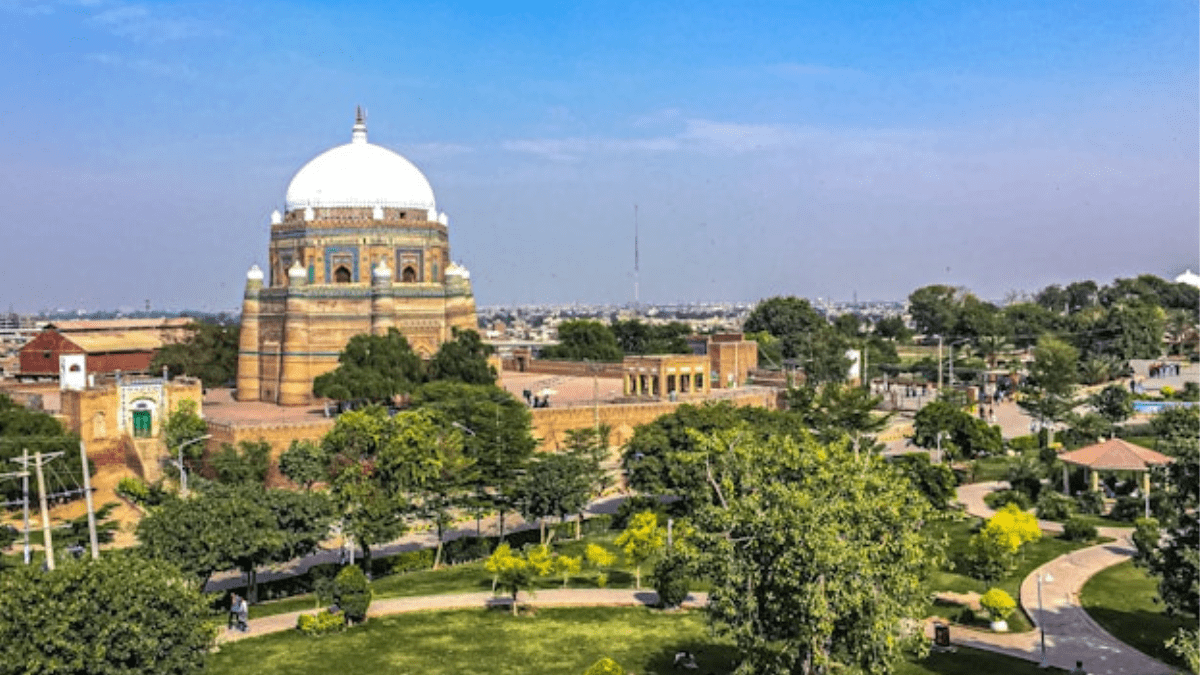
When this great saint died, he was buried at the tomb of his grandfather. In the present time, where Hazrat Shah Rukn-ud-Din was buried, the shrine was declared Ghiyath al-Din Bin Tughlaq to the Sheikh Rukn-ud-Din family. The Mausoleum was constructed in a glorious style, which represented Tughlaq Architecture. In the 1970s, the Punjab Government Archeology Department of Awqaf adorned it again.
The mausoleum was embellished with glazed tiles, red bricks, and blue tiles. The mausoleum was built with burned bricks. An octagon was created in front of the tomb. The side walls of the shrine are powerfully connected with wooden strips.
That helps to make the shine more glorious and attracts its gleaming. It can be easy to see the shrine at 45km. The tomb’s height is from a land surface of about 1505 ft. The Dome is declared the second-largest tomb in the world after Bajpur (Hindustan).
Shrine of Peer Hazrat Yousaf Shah Gardez:
Hazrat Yousaf Gardezi came to Multan city in 1088 AD.
The rectangular shrine is adorned and encircled with white and blue glazed tiles. It is decorated according to a unique Multani design.
Hazrat Yousaf’s purpose was to migrate to Multan to convey Islamic education. The shrine is located at 5FV8+WHP, Along Bohar Gate, Inner City, Multa, Punjab. The inner side of the shrine is adorned with mirrorwork (ayina Kari). He RA was born in 1058 in Gardez and died in 1136 AD.
Tomb Peer Syed Hamid Shah Gillani:
Tomb Peer Syed Hamid Shah Gillani is situated in Gillani Mohalla, Inner City, in Multan City. The shrine was constructed in 1934 AD in a traditional style. Though the area is under British Colonial administration, it is decorated admirably. The inner side of the shrine is ornate with flower petals designed to represent Mughal architecture. The lower side is painted in a unique style.
14- Multan Handicrafts:
Camel Lamps:
Multan City is famous for producing unique and stylish Camel lamps. These simple works inspire each one. The factory ran a hundred years ago. Now, in the present time, with the reduction of camel skin, they also use many Halal animal skins in making lamps. First, they clean the camel skin. After this, they use a different procedure to make it accessible and antibacterial.
In 1910, Ustad Abdullah adopted Naqashi in an inspirational manner on camel skin lamps. Now, his grandson Abdul-Rehman Naqash runs this business. Three different men in Multan make exquisite camel lamps. First is Clyman, the second is Naqash, and the third is Dabgar. People can buy all types of camel lamps through online orders.
Yet, they are making different items from camel skin.
- Vases
- Hanging
- Side Table Lamps
- Design of Decoration Lamps
- Jungle Design
- Floral Design
- Caravan Design
- Leaf Design
- Zarish Design
- Style of Decoration Lamps
- Roof hanging lamps
- Globe lamps
- Table lamps
- Wall Hanging lamps
- Glass or flask lamps
- Vases of Camel lamps
Multani Khussa:
Multani Khussa is famous all over Pakistan. The Khussa is renowned for its durable strength. In history, China made Khussa for the first time. But it has failed to provide its unique features. The khussa consists of flat wooden slippers. These slippers are unsuccessful in protecting feet from dust and cold water. During the Mughal Empire, khussa was made in different styles.
Jahangir (Nur-ud-Din Muhammad Saleem), son of Akbar, introduced Khussa in a new version. All over the world, people can buy Multani Khussa online. In Multan, Khussa is made in different styles. Multani Khussa is made of leather. The handmade thread slippers are made with vegetable-tanned leather. To make it more beautiful, decorate it with fabric. Yet, they use embroidered shells, jewelry mirrors, and stylish stones.
15- Libraries:
a- Garrison Public Library:
Located Near Askari Phase-I, Sher Shah Road, Defence Officer Colony, Multan. You can visit the collection of book collection.
b- E-Library:
It is located at the District Sports Complex, Kalma Chowk, near State Bank, Tariqabad, Multan. The purpose of e-library construction is to promote trends among students. So they can read and get information through online services.
16- Traffic Police:
The traffic police is a kind of Punjab police. They are responsible for protecting the citizens.
- They are responsible for traffic safety.
- Responsible for taking care of the traffic signal.
- Road Sign and Closure Responsibilities.
- Also, answer questions and take care of passengers while traveling.
17- Hospitals:
- SN Dental Care Hospital
- Medical Links Hospital
- Shaheena Hashmi Polyclinic
- Shan Medical Center
- Khan Medical City Hospital
- Chughtai Medical Center
- Punjab Hospital
- South Punjab Hospital
- Prime Hospital
- Al Khaliq Hospital
- Mash Medical Center
- Bakhtawar Amin Medical and Dental College
18- Multan District:
The total area in Multan District consists of about 3,720 square kilometers. According to an estimate, in 1998, its population was 3.12 million. The Multan District is a district in the Province of Punjab. In the 2017 census, its population reached 4,746,166. According to the census of 2017, the Muslim population consists of 99.37%, and the Christian Community is 0.54%.
Multan Tehsils:
- Mumtazabad Tehsil
- Sher Shah Tehsil
- Shujabad Tehsil
- Jalalpur Pirwala Tehsil
- Bosan Tehsil
- Shah Rukn-e-Alam Tehsil
19- Multan Cricket Stadium:
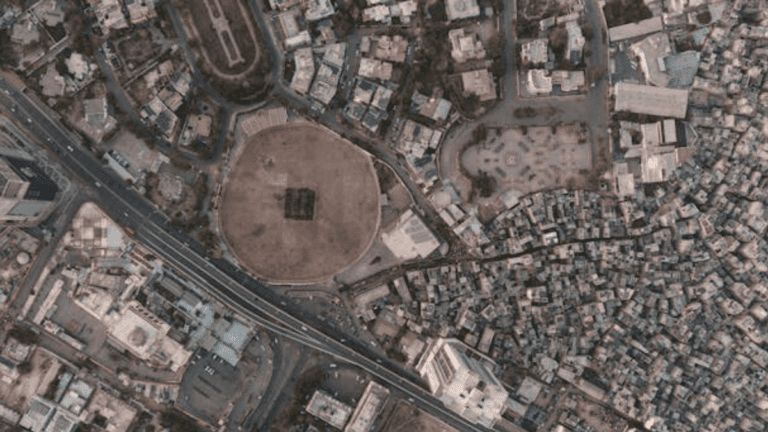
It is located on Vehari Road, in the suburbs of Multan City. In the replacement of the Ibn-e-Qasim Cricket Stadium, there was inaugurated a new Cricket Stadium was inaugurated in 2001. Flood lights are implemented there, yet the player can perform better. The stadium has a capacity of 35,000 people. In 2001, the First test match was played between the Pakistan and Bangladesh teams.
Match Details:
- The first One Day Match was played between Pakistan and Bangladesh on 9 September 2003.
- On 16 February 2006, Pakistan and India performed a day/night match.
- In 2018, the Pakistan Cricket Board announced that Pakistan Super League matches would be organized there.
- On 26 February 2020, the Pakistan Super League organized a match between Peshawar Zalmi and Multan Sultan.
- PCB (Punjab Cricket Board) announced three ODI test matches on 30 May 2022. The match was played between Pakistan and the West Indies, and on 8 June 2022, the match was played.
- A test series was held between Pakistan and England in August 2022.
- Asia Cup 2023, the opening match, was played between Pakistan and Nepal.
20- European Visitor Opinions on Multan:
Hindustan is popular among foreign tourists. Many visitors came there for the sake of exploring the beauty of Hindustan. Many Arabs, Chinese, and European visitors are attracted to Hindustan and greatly admire its places. Many famous tourists also travel to Multan.
William Finch:
William Funch, a European Tourist visiting Multan, reports that the developed city of Multan is comparable to Lahore City.
Growth & Mr. Steal:
European visitors, Mr. Growth & Mr. Steal, reached Multan City and described the ancient city of Multan as poor as other cities. When traders come there and stay for a time, it is valuable for the local people; in this way, their income increases.
Tavernier:
Famous French Tourist Jean Baptiste Tavernier reached Multan during Shah Jahan Alamgir and visited Hindustan from 1641 AD to 1668 AD. He identifies Multan as famous for its blue tiles and the cloth weaving industry. First, it reached Thatta, and due to the weakness of river facilities, it was better to go to Lahore City. The workers are nervous due to the shortage of income. Many people leave for the cloth-weaving industry.
Thevnot:
French Tourist Thevnot visited Multan in 1666 AD in the era of Aurangzeb Alamgir. The Multan land is fertile due to the abundance of river water. Multan is the central hub for the production of many commercial activities. With time, the distance of the Indus River from the commercial activities increased. The city is famous for the production of crops and the abundance of camels that travel to Ghazni with the goal of trading. In short, the city of Multan is beautiful due to its unique adventure.
Mounstsuart Elphinstone:
On 11 December 1808 AD, British Elphinstone traveled to Kabul and stayed at Multan city. He narrates that Multan is situated at the top of a fort, where many shrines, but two tombs, are constructed with blue tile.
21- Conclusion:
The temperature in Multan is hot. The Shrine’s architecture, specific culture, and majestic beauty make it more beautiful. Although the temperature in Multan is warm during the summer, the famous city showcases its rich culture, history, and various adventurous sites. When visitors come to Multan, they will never feel bored. When you visit Multan, you’ll find the city’s architecture and its well-preserved condition to be truly inspiring.
FAQs:
1- Was Multan City a significant part of the Indus River Civilization?
Multan is a major center of the Indus River Civilization. Economically, it serves as a significant hub in Western Punjab.
2- Why is Multan as famous as the City of Saints?
Multan city is renowned as the City of Saints due to its numerous saint shrines.
3- Which Soghat is popular in Multan?
There are many special cuisines, but the popular Soghat is Sohan Halwa, which is famous in Pakistan.